By Nicholas Lo, Chief Business Officer, Bitbase
I recently spoke with Mpost about the thinking behind ORIGIN, the first season of Bitbase Points. Now that the interview has been published, I would like to expand on its central point: why ORIGIN starts from the way users already trade, rather than from trading volume.
The limits of a volume-only approach
A points design built around trading volume is the easiest to understand: more trading, more points. But it tends to concentrate points on short bursts of heavy trading, and it can lead some users to change how they trade for the sake of points, or to trade beyond their means.
When we designed ORIGIN, the first question we had to answer was what points should record. Our answer was genuine, sustained participation on Bitbase.
How ORIGIN distributes points
ORIGIN distributes a fixed 1,000,000 points every week, calculated and distributed daily. Each day's points are allocated according to each user's share of that day's total contribution, rather than as a fixed amount per trade.
Contribution comes from four sources: trading, holdings, consistency and referrals. Users who mainly trade, users who mainly hold assets or use Earn, users with a steady trading rhythm, and users who bring new people to the community can each take part in a way that suits them. We did not want any single activity to determine a user's contribution, so there are several sources. The weights and the full formula are not published. That is a deliberate choice: it makes the system harder to game and protects users who take part genuinely.
Of the four sources, the one I most want to highlight is consistency. The more trading days a user has in a week, the higher its contribution. It measures how steadily someone takes part, not how much they trade.
Fairness as a precondition
Wherever points have value, some will attempt wash trading, manipulation or referral abuse. ORIGIN monitors for these continuously, and where violations are confirmed, the related points are deducted or the accounts are removed from the program. The referral bonus applies only to direct referrals and does not accumulate across tiers, which removes the incentive to build referral chains for points.
The principle behind these rules is simple: each week's 1,000,000 points should go to users who genuinely take part.
How we measure ORIGIN
On ORIGIN's first day, 14,161 users received points, and by the end of the first week more than 17,000 users had received points. Before launch, we recognized users who had been trading on Bitbase through Alpha points, based on valid trading in the months before ORIGIN began.
The first week's results are encouraging, but they are not how we measure ORIGIN. The program runs for 26 weeks, to May 4, 2027. What matters to us is how many users keep taking part across those 26 weeks. Retention, new users and platform activity should follow as natural results of a healthy community, not stand as targets in themselves.
ORIGIN and Bitbase 2.0
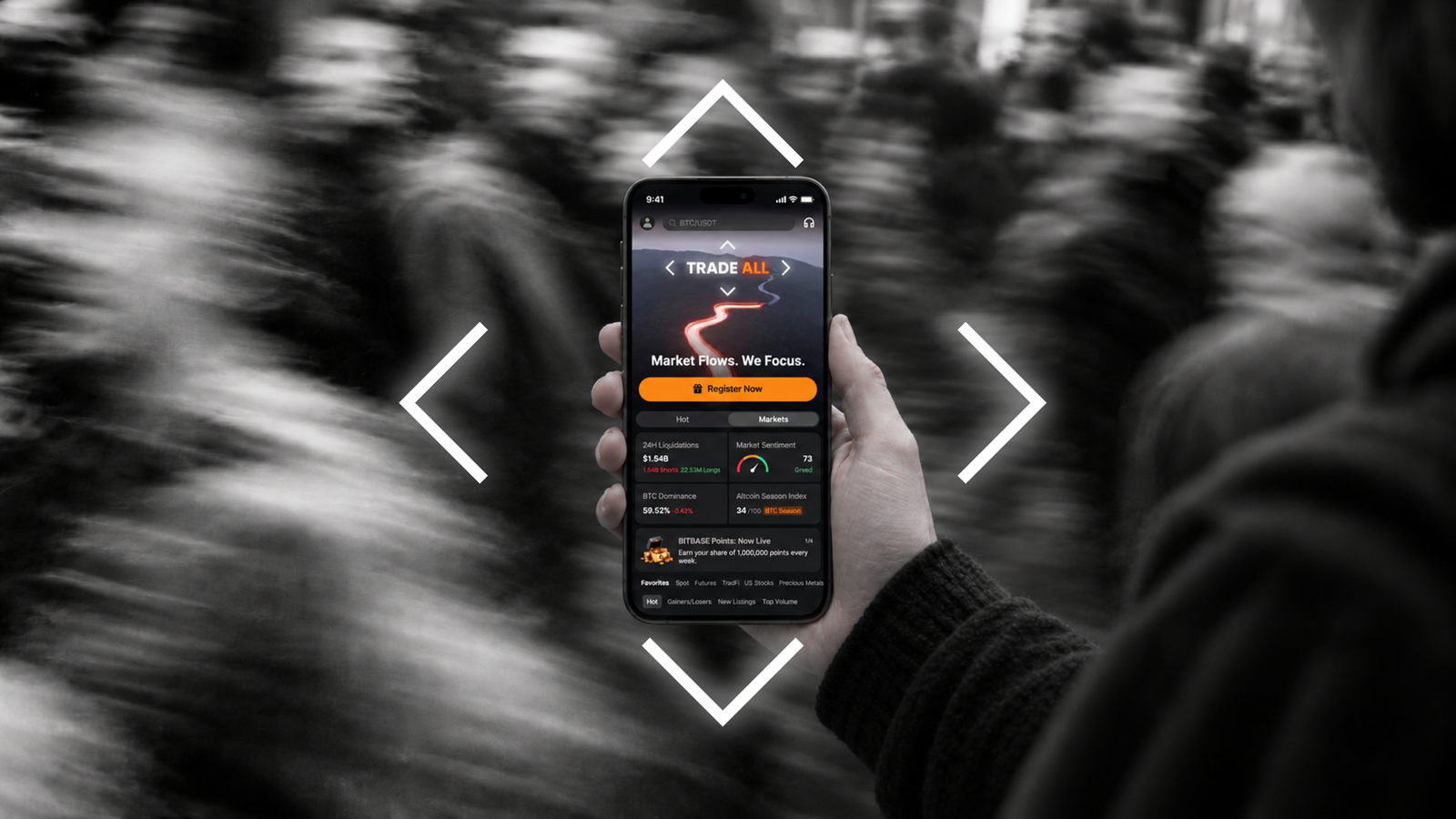
The Bitbase 2.0 tagline is "Market Flows. We Focus." Markets are always moving, and we choose to focus on what creates real value for users. ORIGIN's line, "Every Move Counts", applies that idea to points: every day and every action a user takes on Bitbase is recorded.
Users' trading, holdings and participation on Bitbase shape how the platform develops, and we will keep improving the product and experience in response. How ORIGIN evolves will be guided by user feedback, and any plans will be announced through official channels.
All Bitbase users join ORIGIN automatically. Points page: bitbase.com/points.
Read the full Mpost interview: Beyond Trading Volume: How Bitbase's ORIGIN Program Aims to Build a More Engaged Trading Community.
Related reading
Other Bitbase articles on this topic:
- Bitbase 2.0, Seen from the Business Side
- Consistency: How Trading Days in a Week Count Toward Contribution
- Referrals: How 25% of Direct Invitees' Contribution Counts
- ORIGIN Week One in Review
- The Industry Doesn't Need Another 'Casino'
Disclaimer: This article is educational content from Bitbase, provided for information only. It is not investment, trading, tax, or financial advice, and not a promise of returns. Trading crypto assets and leveraged products carries significant risk, including the possible loss of your capital. Written as of November 2026.