Author: Zen, PANews
The blockchain gaming market has not seen any eye-catching news for a long time.
Over the past few years, the once-popular Play-to-Earn has gradually receded, game tokens have generally experienced deep drawdowns, and a large number of developers have shut down projects or shifted to other businesses. Even projects with well-known IPs and mature communities are finding it increasingly difficult to sustain operations.
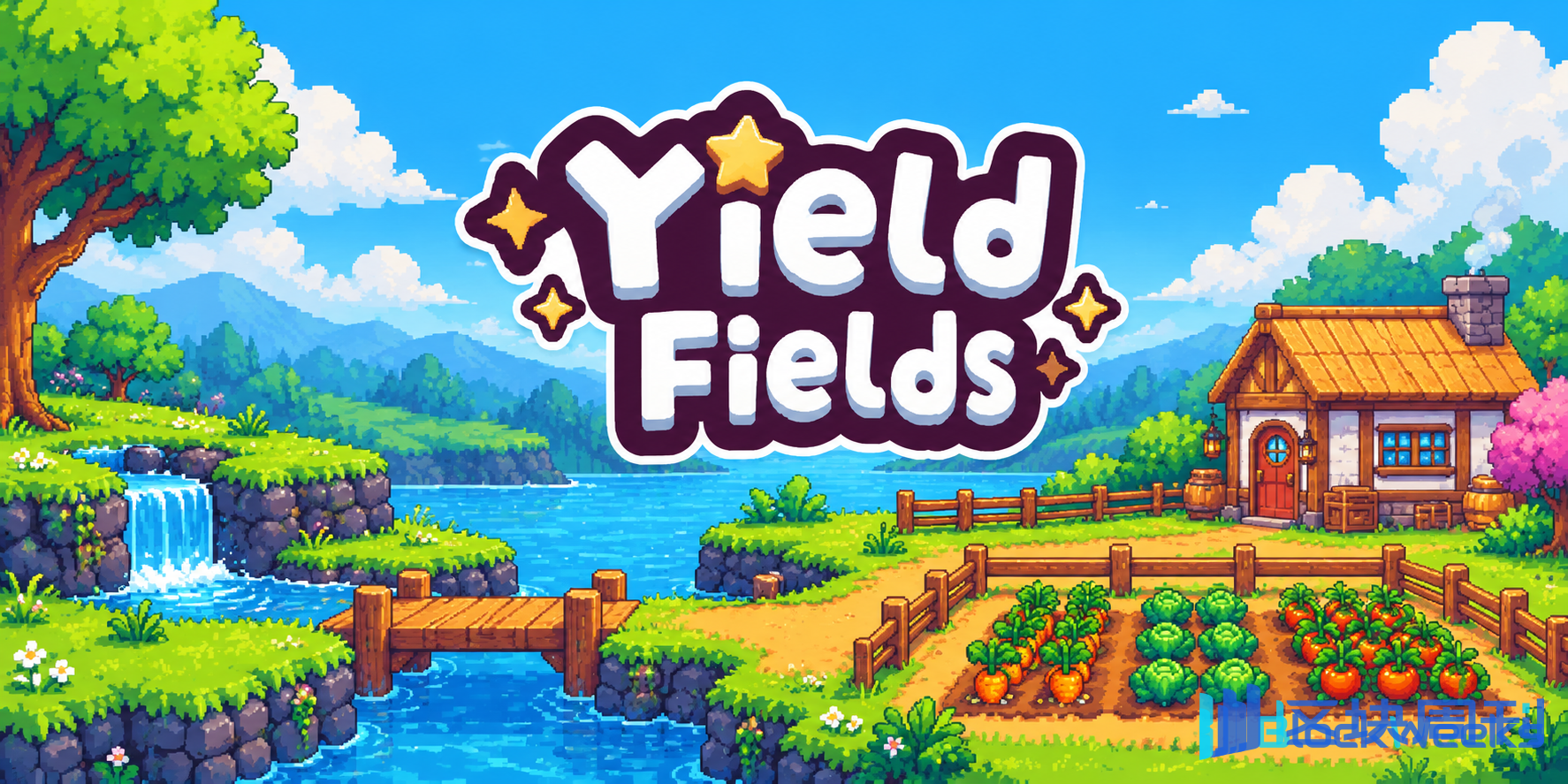
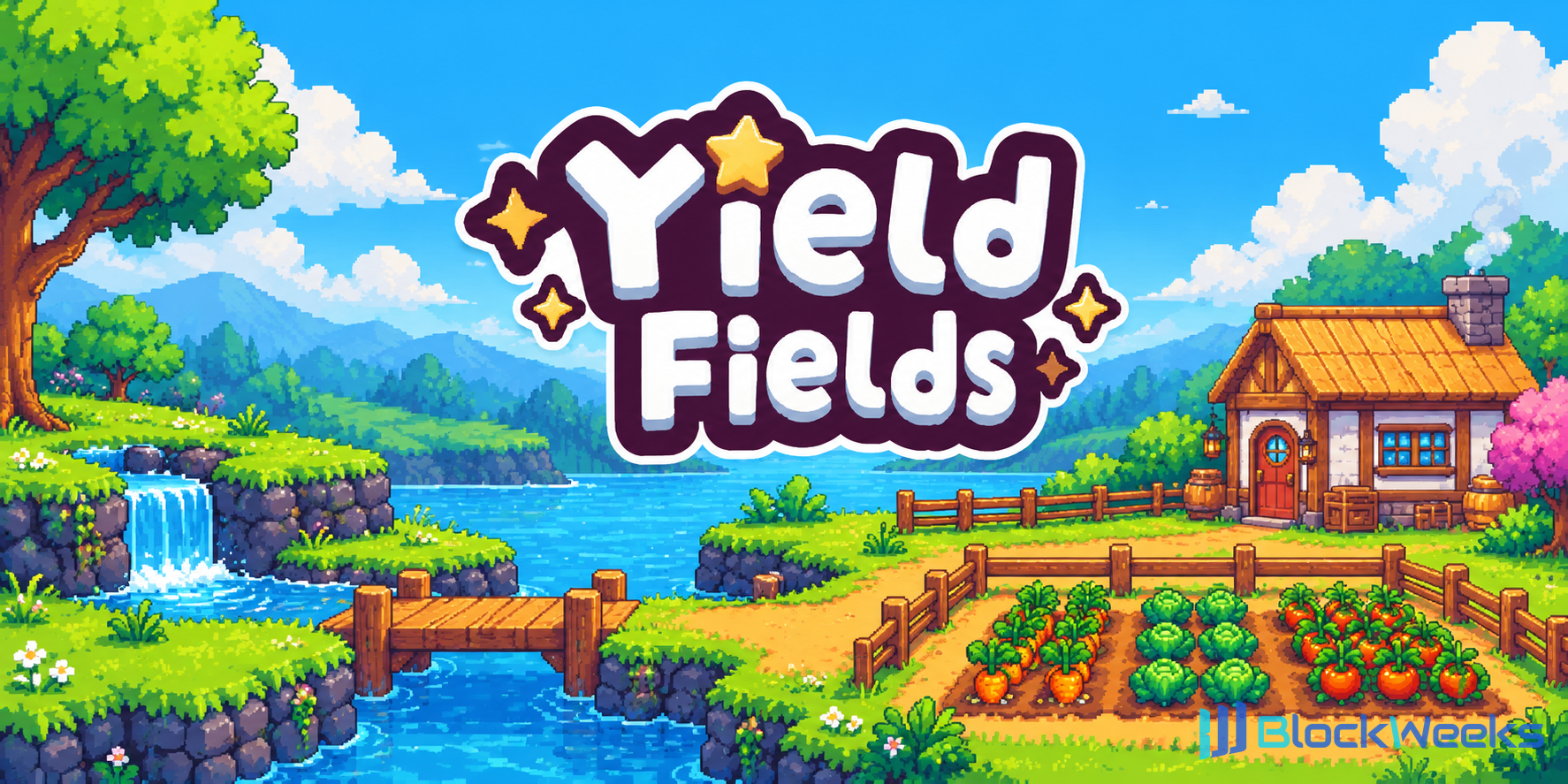
But Yield Fields, an on-chain farming game that has not yet officially launched, recently created a rather lively NFT sale. On October 13, the 3,333 Yield Fields Deeds NFTs issued by Yield Fields on Robinhood Chain sold out entirely about 30 seconds after the public sale began. Calculated at the final public price, the issuance amount of this batch of NFTs was approximately $8.3 million.
A farming game not yet launched raises over $8 million in 30 seconds
Yield Fields was launched by blockchain game developer Skarly, who previously participated in Wolf Game and created Onchain Heroes. The new game is planned to be deployed on Robinhood Chain, adopting farm management gameplay and building the game economy around land, crops, resource production, and player trading.
The Yield Fields Deeds NFTs whose sale was so hot this time are, simply put, land certificates in the game. Their issuance adopted a Dutch auction, originally planned to last 24 hours, with the NFT price gradually decreasing from 1 ETH and able to fall as low as 0.069 ETH. However, after the public sale began, the 3,333 NFTs sold out almost immediately, with the final price settling at about 0.999688 ETH.
Calculated at this price, all NFTs correspond to about 3,332 ETH, equivalent to about $8.3 million at the coin price at that time. However, because the actual settlement prices for some whitelist participants are not yet clear, more accurately speaking, $8.3 million is only an estimated amount based on public transaction prices.
The popularity of Yield Fields actually showed signs earlier. From September 17 to 28, Skarly held an event called Deed Season through the previously developed Onchain Heroes game "Maze of Gains," allocating 850 whitelist qualifications for the new game's NFTs to participants. The event attracted 7,591 players to participate, with a cumulative 226,904 game challenges completed.
According to official disclosures from Yield Fields, ordinary players do not need to hold Deeds to participate in planting and harvesting, while land NFT holders can build additional facilities and produce special resources. For example, land holders can produce fertilizer through Fert Decks and provide production materials to ordinary farm players who need them.
The development team also designed a value accumulation mechanism linked to ETH. When ordinary players trade some game outputs, part of the funds will accumulate as underlying ETH support for Deeds, and holders can later retrieve the corresponding value by burning the NFTs. Based on this mechanism, the development team seeks to transform land NFTs from mere collectibles into assets that participate in the game's resource supply and share in the value of economic activity.
Speculative enthusiasm after issuance also quickly extended to the secondary market. According to OpenSea data, as of October 20, the cumulative trading volume of Yield Field Deeds had reached about $2.1 million, with the 3,333 NFTs held by about 1,300 independent wallets. In addition, the floor price of this NFT series has recovered from 0.905 to 0.94 ETH in the initial issuance period to about 1.142 ETH (about $2,750), an increase of about 14.2% compared with the public sale settlement price.

At present, Yield Fields has not yet officially launched, and the core of market trading remains expectations for future returns and asset prices. In the crypto gaming market, this speculative enthusiasm is often also closely related to the public chain ecosystem in which the project is located. Yield Fields chose to issue NFTs on Robinhood Chain, precisely stepping into a new round of market hotspots.
From Abstract to Robinhood, blockchain games begin looking for new footholds
For developer Skarly, this is not the first time betting on a popular ecosystem. In early 2025, his Onchain Heroes was one of the popular games in the Abstract ecosystem. Now, he has brought the new game to Robinhood Chain, while Abstract, which he once bet on, is about to exit the stage of history.
Abstract is an Ethereum Layer 2 launched by Igloo, the parent company of Pudgy Penguins, focusing on on-chain applications for ordinary consumers. With a well-known IP, simplified wallet operations, and a points incentive mechanism, it was once regarded as an important competitor in consumer-grade blockchain.
Abstract did indeed attract many developers. Its ecosystem has cumulatively had more than 144 applications and over 400,000 users, and it has established partnerships with brands such as Disney and Red Bull Racing. It was during this period that Onchain Heroes entered Abstract and gained market attention with the help of the ecosystem's popularity.

But ecosystem scale did not translate into sufficient commercial revenue. On October 6, Igloo, the protocol developer of Abstract, announced that it would shut down on December 15. CEO Luca Netz revealed that the company had invested substantial funds in Abstract over the past 18 months, with cumulative losses reaching tens of millions of dollars. With stagnant user growth, insufficient on-chain liquidity, and constrained DeFi ecosystem development, continuing to independently operate a public chain no longer had economic viability.
Abstract's exit has also forced game projects within the ecosystem to reselect their development directions.
For example, the pixel-style role-playing game Gigaverse has ended operations of its old version and plans to deploy its new title Gigaverse Online to Robinhood Chain, while some original NFT assets are planned to be migrated to Ethereum mainnet. Different projects have different migration paths, and some game projects choose to deploy to ecosystems such as Base. But their common point is that development teams must first reassess the public chain's users, liquidity, and operating costs.
The hottest "destination," Robinhood Chain, was launched by brokerage Robinhood and went live on mainnet in July 2026, focusing on tokenized financial assets, DeFi, and on-chain trading. Compared with gaming public chains, the financial business and user channels behind Robinhood provide new imaginative space for applications built around asset trading, return expectations, and financialized gameplay.
Yield Fields is a new project launched precisely against this backdrop. It did not migrate directly from Abstract; instead, it was redeveloped by Skarly, who had previously accumulated users on Abstract, and chose to issue NFTs on Robinhood Chain.
Following ecosystem heat to find opportunities
More noteworthy than the NFT sellout in Yield Fields is how the development team used users accumulated from an old game, the market attention of a popular public chain, and the NFT issuance mechanism to complete the launch of a new project in a relatively short period of time.
The experience of Skarly, a developer of Yield Fields, is exactly a typical case. In early 2025, Onchain Heroes quickly became popular after launching on Abstract, with its Genesis Heroes NFT issued at 0.069 ETH, and the floor price once rose to about 0.64 ETH. But as market enthusiasm faded, the floor price of this NFT collection has dropped to about 0.07 ETH, shrinking nearly 90% from its historical high.
However, the value of Onchain Heroes is not only reflected in old game assets. The development team continued to operate "Maze of Gains" this year and used this game to drive traffic to Yield Fields. The old game is responsible for maintaining the community and organizing player participation, while the new game obtains startup funds through NFT issuance, and popular public chains provide a new market environment. The entire process forms a relatively lightweight project launch path.

This is exactly a practical advantage of small blockchain game developers. Compared with traditional game companies that need long-term investment in research and development and maintenance of large game worlds, the sunk costs of small teams are relatively limited, allowing them to adjust product direction and deployment networks more quickly.
When the original ecosystem loses growth momentum, they can choose a new public chain, reorganize the community, and then obtain revenue through NFT issuance or other on-chain activities.
For such developers, public chains are not only the technical infrastructure that supports game operation. They also provide user entry points, trading markets, liquidity, and community culture.
Choosing an ecosystem that is at the center of market attention may reach paying crypto users faster than simply adding game features.
But this also means that the success of a project basically depends entirely on the popularity of the external ecosystem. As a result, the repeated cycle of short-term speculation ultimately evolves into a game of constantly looking for the next hotspot.