News Center


Global Payments Weekly | 2026 W45
 USDCHong Kong tokenized depositsCircleNigeria regulation




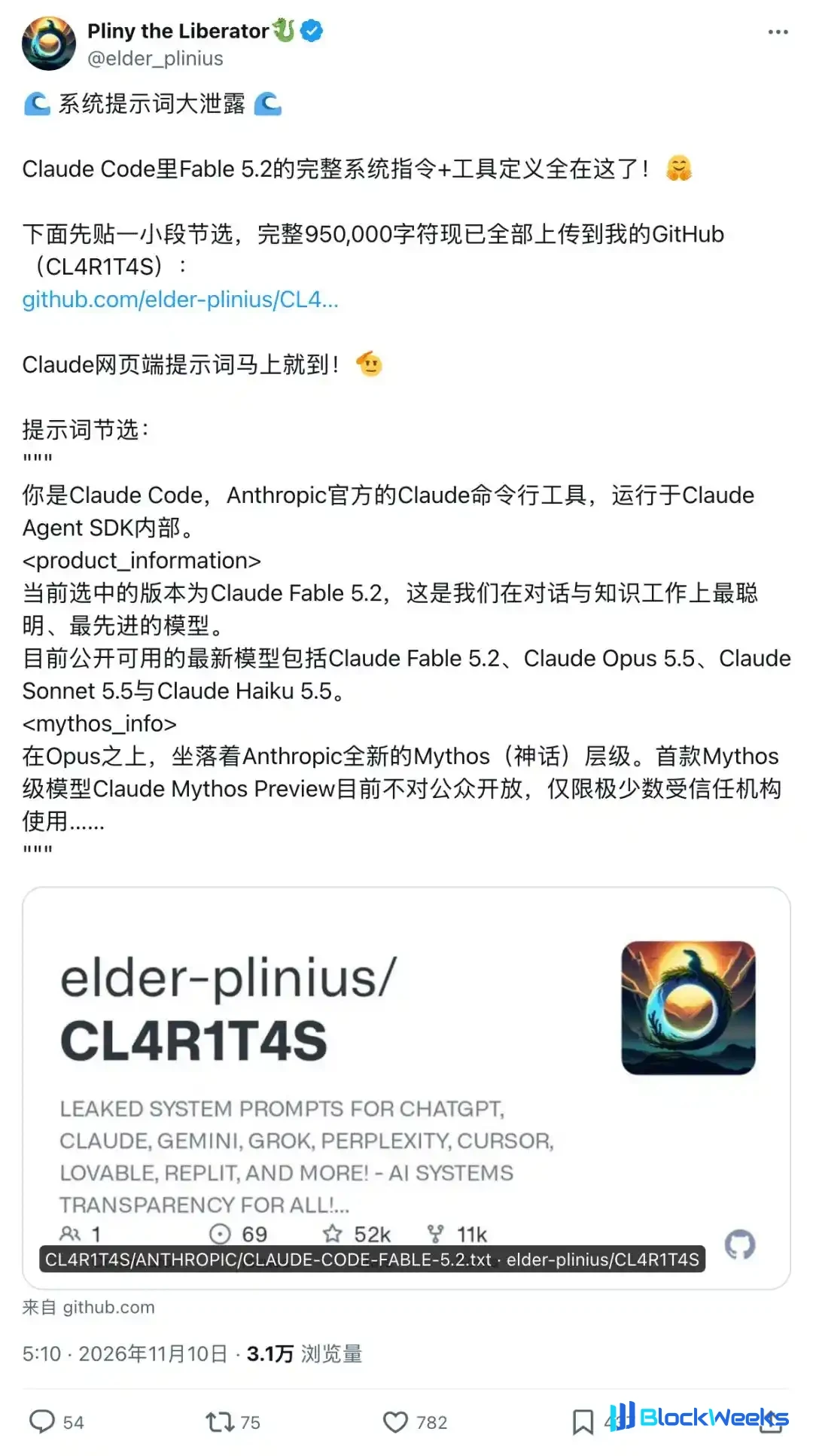
Claude's New Flagship Just Launched—and Its 950,000-Character Secret Prompt Leaked
Two hours after Anthropic rolled out Claude Fable 5.2, jailbreak hacker Pliny breached Claude Code and dumped roughly 950,000 characters—7,832 lines—of system prompts and tool definitions onto GitHub. The leak reveals 128 built-in tools and 44 skill sets covering everyday tasks like reservations, expense reports, and prescription refills, along with strict guardrails: local delete commands are locked by default, and stock trading, money transfers, and password autofill are refused even with user consent. It also exposes Anthropic's deliberate weakening of kernel-optimization capabilities during training to stop rivals from using Claude to train their own models, plus an internal Mythos tier reserved for trusted institutions.
2 hours ago

55 Million ZETA Set for Burn: ZetaChain Keeps Building After Shutdown Announcement
ZetaChain's community has passed a governance proposal to migrate ZETA to Solana, with the L1 set to shut down around December 9, 2026. Roughly 55 million ZETA will be burned after the migration, and ZETA will become a deflationary token starting in 2027, with the team pledging not to sell newly unlocked foundation tokens that year. ZETA's value capture is also shifting from L1 gas to AI product tokens, with the private AI app ZetaLabs set to launch, offering staking for premium features, token payments, and governance—already drawing over 120,000 waitlist signups.
 ZETAZetaChainAI AgentZetaLabs
2026-11-13
Coinbase Wallet Sees 12x Surge in Solana Trading Volume Without Any Dedicated Incentives
Coinbase Wallet's head of trading, Ox Bid, revealed that Solana trading volume within the wallet surged 12x in three months—without any Solana-specific incentives. Growth was driven by a 99% swap success rate, a revamped Discover tab, and the Live Coins feature that lets new tokens trade within seconds of listing. Spot volume has grown 2.5x since July, and the Hyperliquid perps integration has brought in new users without cannibalizing spot trading. Upcoming plans include Coinbase Terminal for pro traders and an AI Agent feature by year's end.
 SOLCoinbase WalletHyperliquidAI Agent
2026-11-08

A 5,000-Word Requirements Doc, and Claude Delivers Only 14%: Testing 28 Agent Configurations
This article introduces LoLBench, a benchmark from Fudan University, City University of Hong Kong, and other institutions, designed to evaluate AI agents' end-to-end ability to go from a feature proposal to a delivered module in large software systems. It covers 100 tasks across 29 systems, with repositories averaging about 2.4 million lines of source code and proposals averaging roughly 5,000 words. Testing 28 combinations of 6 frontier models and 5 scaffolds, the best solve rate was just 14%, with a median of 2%. Much of the token and interaction budget was spent on code localization; adding file-tree and API-spec context raised the best configuration to 34%, yet 66% of tasks remained unsolved, showing that agents still face clear bottlenecks in cross-module coordination and complete delivery.
2026-11-05

Why Is Musk Still Doubling Down on Grok Bot Despite Skyrocketing Costs?
This article examines Musk's aggressive promotion of Grok Bot and the three-step AI strategy behind it: infrastructure, models, and applications. SpaceX secures computing power and energy, a partnership with Anthropic counters OpenAI, and the Cursor team builds the Grok Bot app. The article flags concerns including soaring service costs, Grok's lagging model competitiveness, and fierce competition at the application layer, arguing that the next phase of AI agents is the Life Agent covering consumer scenarios. BTC, LINK, and SOL appear only in recommendations and disclaimers, unrelated to the main topic.
2026-11-04

Leaks Suggest Claude Fable 5.5 and GPT 6.2 Astra May Be Launching Soon
Reports of leaked clues point to unreleased AI models from Anthropic and OpenAI. Users say some Claude Opus 5.5 requests were routed to an unreleased Fable 5.5 model, a Mythos 5.5 label appeared in hidden code on Anthropic's website, and a claude-fable-5-5 entry showed up in the LiteLLM catalog. Meanwhile, OpenAI's gpt-6.2-astra surfaced in Codex usage data for some accounts. These rumors rest on demos, catalog entries, and website labels, none officially confirmed, and the traces were quickly removed. The article also touches on Anthropic's IPO progress and its model release history.
2026-11-02
Musk's Neuralink Just Got a Major Upgrade: Grok Plugged Into the Brain, Letting You Control AI With Your Thoughts
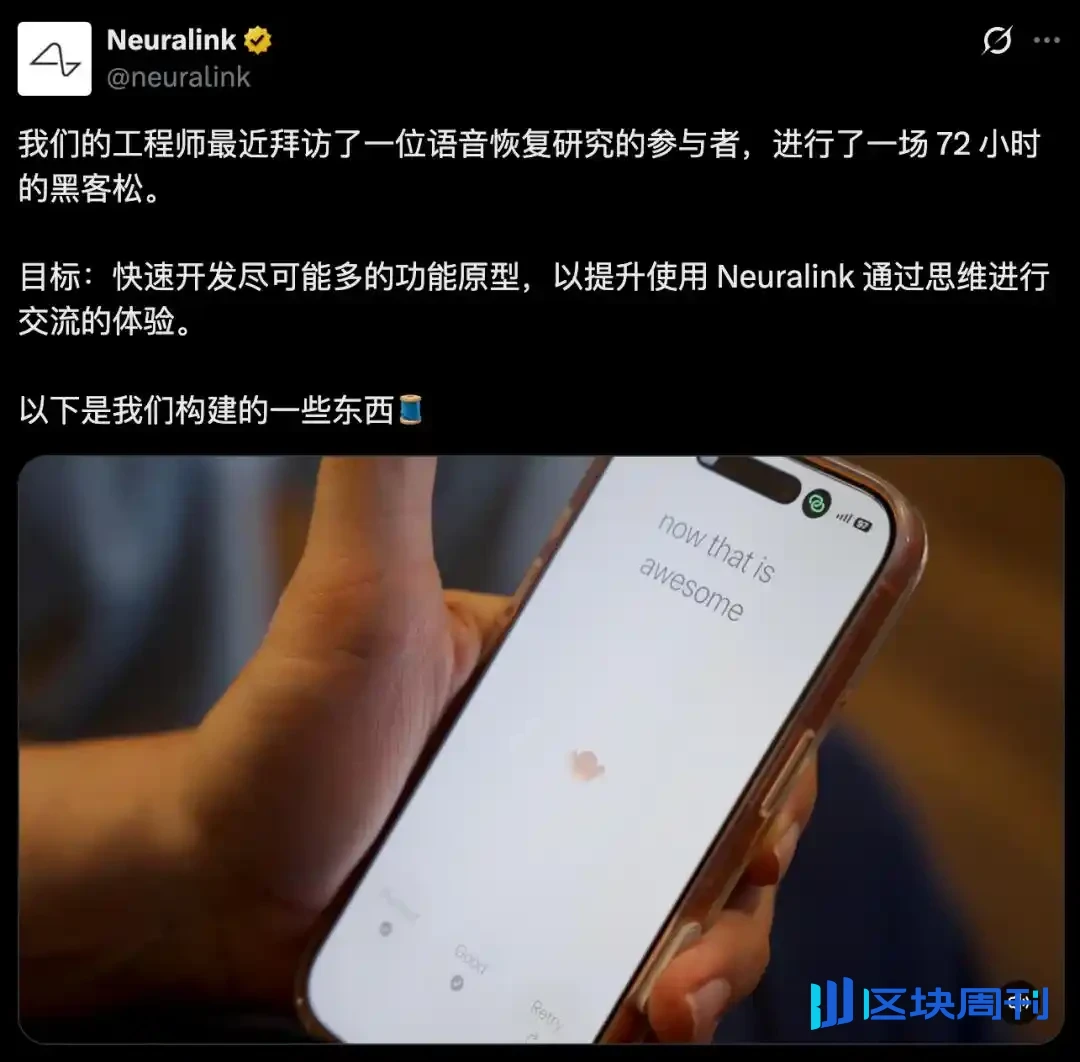
Neuralink's latest breakthrough: over a 72-hour hackathon, Musk's team built eight new capabilities that let ALS patient Kenneth use his thoughts to trigger the Grok agent to operate a computer autonomously. With the Bloom app and a system-level brain-computer input method, he can order coffee, send messages, and make calls just by thinking. The brain is becoming AI's native input, and thought-driven agents could dramatically expand neural bandwidth, reshaping human-computer interaction.
2026-10-31

NEAR Protocol Launches Confidential Pre-IPO Futures for AI Giant Anthropic
NEAR Protocol has announced the launch of confidential Pre-IPO perpetual futures for AI startup Anthropic on the near.com platform, trading under the ticker ANT and built on the Hyperliquid blockchain. Traders can use up to 10x leverage, and position structures are not publicly disclosed. The launch comes as Anthropic files its S-1 with the SEC ahead of a planned Nasdaq listing, with the filing revealing revenue growth from $41 million in 2023 to $4.6 billion in 2025. The ANT contract is currently trading around $115, though price fragmentation exists across different liquidity pools.
 NEARPerpetual FuturesPre-IPO FuturesNEAR Protocol
2026-10-27
130% Surge in Near Protocol (NEAR) Spot Inflows Secures $1.3 Million
This article analyzes NEAR Protocol's recent price action and capital flows. NEAR rose from around $1.60 in August to a October high of $6.00 before pulling back roughly 25% to its current $4.486. On the 8-hour timeframe, spot net inflows hit $1.3 million, a 130% increase—the first clear signal of buyers returning since the October peak. Price found support and rebounded at the 50-day moving average near $4.30. The article notes long-term moving averages remain upward, but volume is shrinking and RSI is neutral; a break below key support at $4.30 would undermine the October rally, with resistance levels at $4.73, $5.00, $5.40, and $6.00.
NEARprice analysismoving averageNEAR Protocol2026-10-27
NEAR Protocol Open Interest Falls 9.5% as NEAR Price Drops 8%
NEAR Protocol's open interest fell 9.5% over the past 24 hours while the token's price dropped 7.9% to around $4.50. A simultaneous decline in price and open interest typically signals deleveraging, with traders reducing risk exposure. NEAR has lost about 13.2% over the past seven days, giving back part of its September rally from below $2 to above $5. On the technical side, $4.50–$4.55 is the first support zone, and a break below could open the door to the October 8 low of $4.29; a move back above $4.90–$5.00 would be needed to confirm buyers have regained control.
NEARsupport levelsNEAR ProtocolOpen Interest2026-10-24