







Monero (XMR) is not welcome on top exchanges as the series of delistings takes an uglier turn for holders following Kucoin's XMR removal. But Kucoin wasn't first and might not be the last: XMR was removed from MEXC, Kraken, Binance and others already.
How Monero struggles from it
The main issue for an asset that's being removed from exchanges will always be the liquidity. In the last 24 hours, Monero's spot flow lost $1.3 million. Despite the increasing volume, the asset is recording outflows and exchange withdrawals. The volume spike is most like being a reflection of a substantial selling activity.
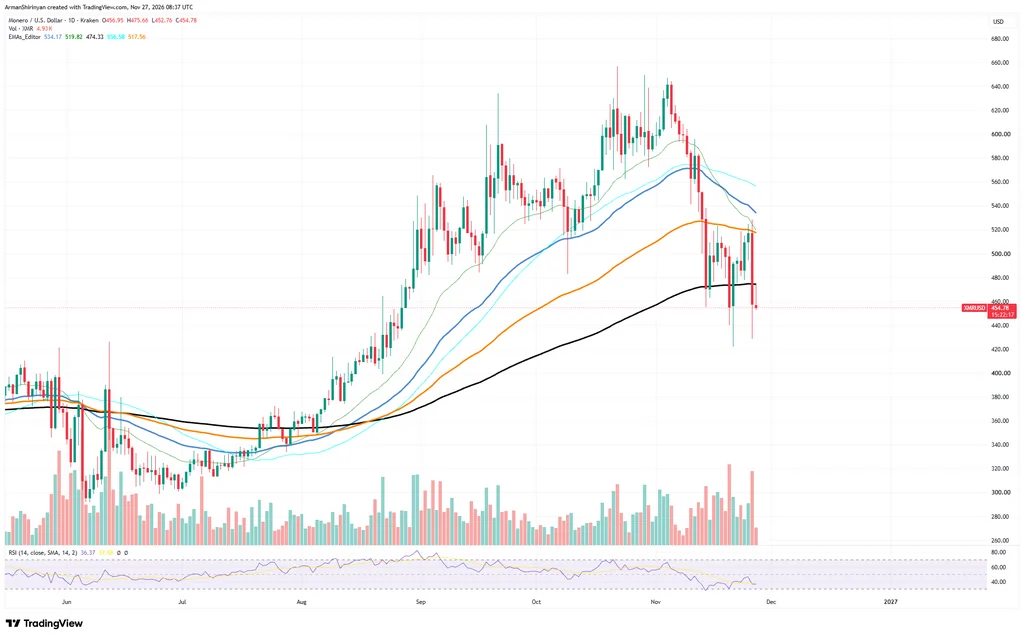
In a single day, XMR was losing almost 20% of its value. If it wasn't for the delisting, price could've broken multiple technical resistances already and confirmed a recovery. As of November 27, the price is slowly recovering, following the general relief on the cryptocurrency market.
Series of delistings
On November 26, Kucoin announced the removal of XMR/USDT, XMR/USDC, XMR/ETH and XMR/BTC trading pairs, effective November 30. The exchange has already limited any deposits, with withdrawals available for all users.
However, Kucoin is not the first (and unlikely to be the last) major exchange to stop operations with Monero. The reason is always the same–XMR's privacy and the blockchain's nature.
Monero is an inherently private cryptocurrency, that limits the ability of explorers to determine transaction destination and senders. That is the main reason centralized exchanges are removing XMR.
They have to follow AML rules and monitor transactions, but Monero's privacy features make this process much harder.
For holders, the problem is not that Monero stops working after a delisting. The network is still active, and XMR can be transferred between wallets or traded on exchanges that continue to support it. The problem is that there are fewer places to buy and sell it. If more large exchanges follow Kucoin, liquidity could become lower, making new selling activity more painful for the price.