
One rather unusual metric on XRP Ledger has seen more than a 3,062% increase in usage which raises a lot of questions. This is one of the largest spikes throughout the year in a function usage that mostly stays low.
What is SetRegularKey?
The function allows users to manage their secondary keys for signing transactions on their wallets and/or accounts. Their main private keys stay offline, while a certain key issued by them is used in daily transactions.
It allows safer work and utilization of their wallets without potentially exposing their private keys. So even if someone grabs hold of your signing credentials, you'll be able to protect your funds by nullifying the issued keys, provided you still retain authorized access.
What's behind the surge?
One way or another, the surge is bizarre. Most likely "legit" scenarios are: automated key rotations among large custodians like exchanges. Some security warnings that triggered massive migration and then, the illicit one: generation of function calls from bots or automated scripts.
The flatlined chart actually represents tens or hundreds of calls daily, but a surge to nearly 4,000 is certainly out of the blue. Unfortunately, we were unable to identify the source of those transactions.
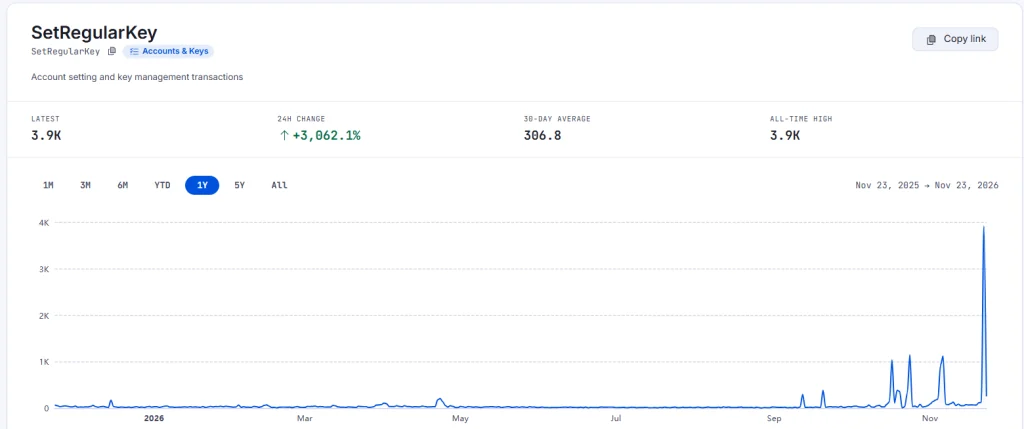
The feature itself is legitimate, so the spike alone does not indicate that users' funds or wallets are at risk. However, an undisclosed exploit or security issue cannot be ruled out without further investigation.
One concerning scenario would involve malicious actors gaining access to wallets and assigning new regular keys to maintain control over them. This would not necessarily mean that the XRP Ledger itself has been compromised, but rather that individual accounts may have been targeted.
For now, there is no evidence pointing toward such an attack, and the activity could just as easily be attributed to routine security operations.
Still, XRP holders should keep an eye on any unexpected changes to their account settings, especially regular keys they did not authorize.
Whether this was a coordinated security upgrade, automated activity, or something more concerning remains unclear. What is certain is that such an unusual spike deserves closer attention, particularly if similar activity continues over the coming days.