
On October 6, the OKX NOW Global Product and Ecosystem Conference concluded in Singapore. At the event, OKX founder Star and Ethereum co-founder Vitalik Buterin delivered opening speeches successively; the heads of OKX's four core product lines—trading, on-chain, AI, and payments—also all took the stage. Former New York Governor and OKX board director Governor Andrew Cuomo, Mastercard Executive Vice President of Blockchain and Digital Assets Raj Dhamodharan, as well as senior executives from traditional financial institutions such as DBS Bank, JPMorgan Chase, Standard Chartered Bank, and Western Alliance Bank gathered to share and discuss topics including the next-generation financial system, round-the-clock market liquidity, digital asset banking, and on-chain security in the AI era.
The following is a review of the event's highlights, compiled by ChainCatcher.
I. Opening Speeches: Star Expounds OKX's Long-Term Vision, Vitalik Discusses Security and Interaction in the AI Era
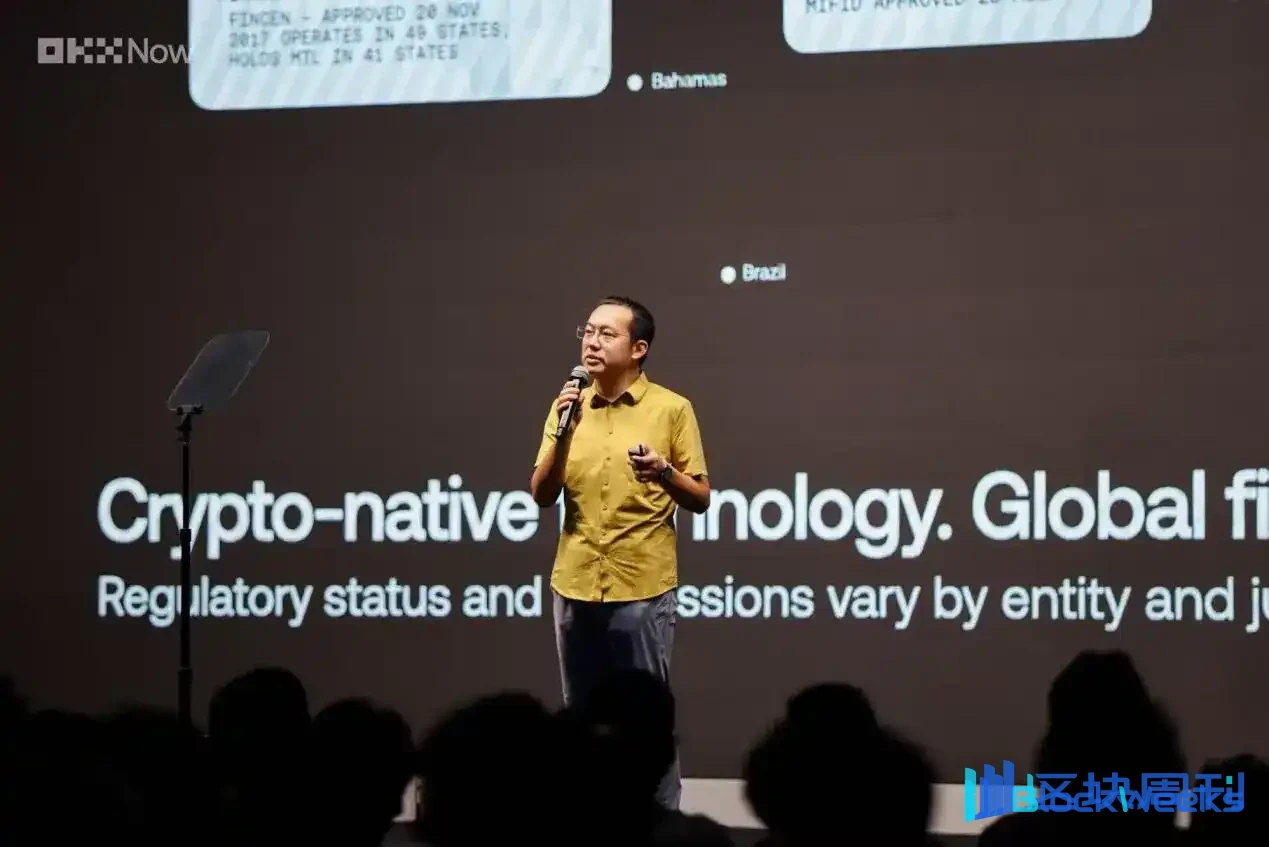
In the opening speech, Star began with the gap in financial infrastructure. He stated that consumer technology has fully achieved globalization, instantaneity, and round-the-clock availability, while the financial system is still built on infrastructure from decades ago. He then reviewed the development history of the crypto industry, believing it has gone through four stages: geek exploration, the formation of financial markets, IC0 and DeFi experiments, and compliance building, and judged that since 2025 the industry has entered a mainstreaming stage.
Following this judgment, Star proposed that OKX "has gone beyond the positioning of an exchange" and is expanding into a global fintech platform, and will reconstruct fintech services for the younger generation from four aspects: fund custody with self-selected custody methods, instant low-cost payments, a unified entry point for investing in multiple asset classes, and AI-driven wealth management.
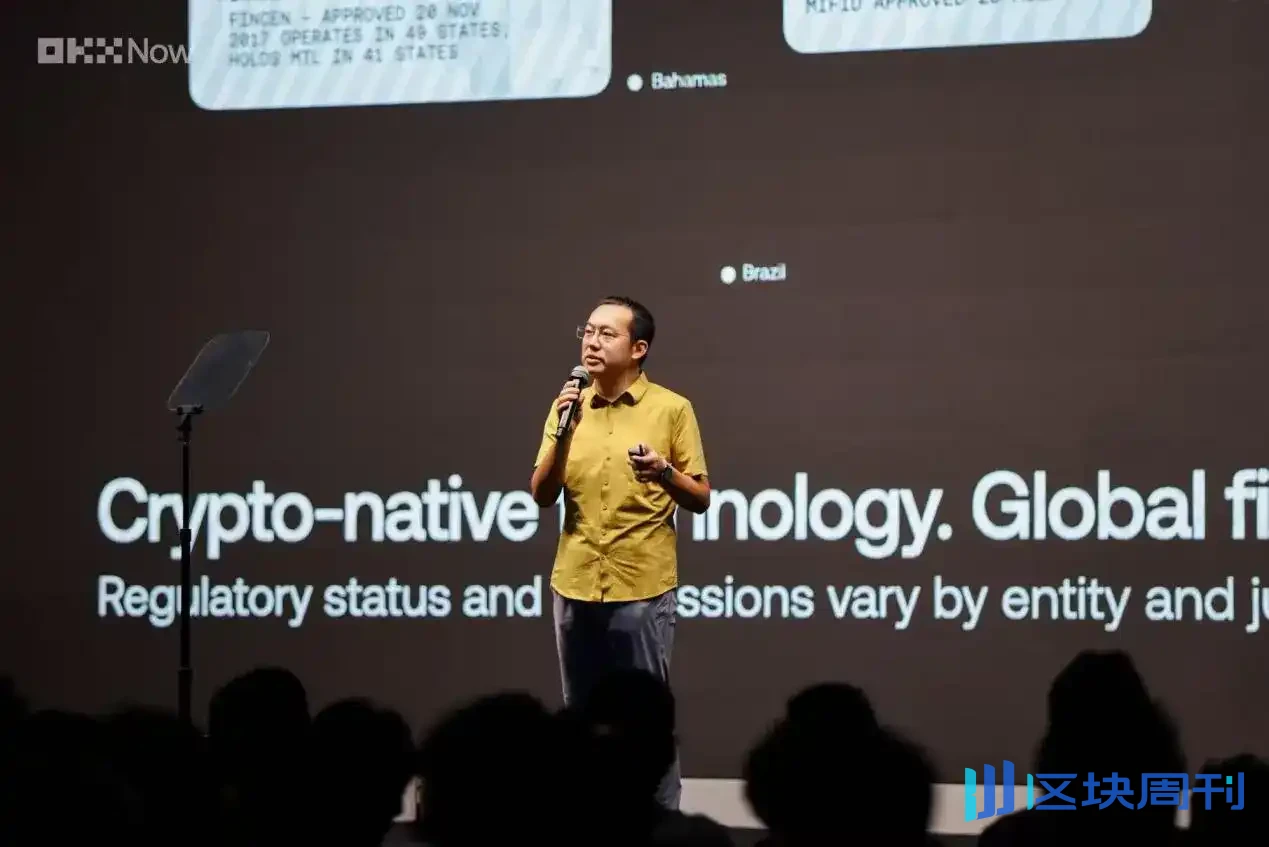
Star believes that "the future will not be a confrontation between crypto finance and traditional finance. Every crypto company will expand into traditional finance, and every traditional financial company will also invest in the crypto field. These two worlds are becoming the same financial system."
He also mentioned that AI is no longer a pilot project for OKX, but core infrastructure. Currently, about 95% of engineering code merge requests are mainly completed through AI workflows, while engineers are still responsible for review and approval; last month, OKX paid as much as $10 million in AI bills to large model companies. Looking ahead ten years, Star said that the internet, crypto technology, and AI are converging, and the combination of the three may bring fundamental changes to financial services.
Vitalik Buterin's special speech also began with the pain points of financial infrastructure, then shifted focus to the intersection of AI and cryptography. He believes that AI is both the industry's greatest current opportunity and its greatest risk: the industry is moving beyond the narrative of "blockchain + programmable value," and "programmable data" enabled by zero-knowledge proofs is emerging. Privacy protocols on Ethereum will rapidly mature, and within the next two years, most people will likely use these technologies "without even realizing it."
Security was the aspect he warned about most. Vitalik pointed out that AI has already demonstrated the ability to break out of sandboxes, attack websites, and discover various software vulnerabilities. "Anything with a vulnerability, GPT-7, Claude 7, DeepSeek 7 will find it." A higher level of security will change from optional to mandatory; at the same time, AI is also helping Ethereum protocols discover vulnerabilities, implement complex cryptography, and perform formal verification. He also proposed the judgment of "AI as a new user interface," and expects that directly executing complex on-chain operations through AI will gradually become the norm, and stated that this will also introduce new issues such as AI's own security. "We are in a fascinating but challenging transition period."
II. Trading, On-Chain, AI, and Payments: Key Layouts of OKX's Four Product Lines
After the opening keynote speeches ended, the heads of OKX's core product lines successively presented the products' recent achievements and progress. The product demonstrations connected the four most mainstream tracks in the crypto industry.
The trading product team disclosed that its RWA market, including tokenized stocks, has an average daily trading volume of about $3 billion, with a peak of $9 billion. The team revealed that in the coming months it will launch underlying options and its own tokenized stocks (xRWA); in addition, it also disclosed for the first time an AI Bot still in testing, which allows users to generate trading strategies in natural language and complete backtesting and deployment.
The on-chain team demonstrated the newly launched DEX trading terminal, which integrates popular token screening, on-chain fund flow tracking, social sentiment monitoring, and one-click instant trading, and supports user-customized workspaces. The team introduced that in the past 30 days, the combined trading volume of decentralized perpetual and spot markets exceeded $1 trillion; the scale of on-chain tokenized RWA has increased from about $2 billion to nearly $40 billion; X Layer's DeFi TVL grew about 11 times this year, reaching a record high in September. In addition, OKX also launched Exchange OS for builders, opening its exchange infrastructure for creating on-chain markets.

The AI team elaborated on its core philosophy, namely "AI and finance start with the user": AI needs to understand user intent, respect the boundaries set by users, and hand back to users at decision points that require human judgment. Based on this philosophy, the team has built a complete set of capabilities to help AI agents scale from "intelligence" to "action": Agent Trade Kit allows users' AI agents to directly connect to OKX exchange data and execute trades; On-chain OS supports operating on-chain assets with natural language, Agentic Wallet allows funds to be allocated to agents within preset guardrails; the OKX AI agent marketplace supports subscribing to signals from professional trading agents and authorizing copy trading; developers can list and monetize their own models through the AI Builder program.

The payments team introduced that OKX Money, a stablecoin savings and payment application, is already available in more than 30 countries. The product is mainly aimed at non-traders and non-crypto-native users. Accounts are built on self-custodial smart accounts and run on the X Layer wallet network; the Pay Boost feature launched for European users supports funds continuously earning interest, with spending deducted directly from the interest-bearing balance while the remaining funds continue to appreciate. A live demonstration also showed a transfer from Singapore to Venezuela arriving within seconds. The team also previewed that it will support AI agents (after user authorization) in creating investment strategies and executing small transactions within OKX Money.

III. Multiple Roundtable Dialogues Jointly Discuss the Next-Generation Financial System
After the keynote speeches and product demonstrations, the conference moved into multiple roundtable dialogues. The four discussions linked core topics such as compliance, the financial system, liquidity, and the future of digital banking. Among the guests on stage were figures with regulatory backgrounds and Wall Street faces.
"Global Vision, Rooted in Local Markets" brought together former New York Governor and OKX board director Governor Andrew Cuomo, along with OKX Brazil CEO Guilherme Sacamone, Singapore and Australia Regional CEO Gracie Lin, and Western Europe General Manager Roy Van Krimpen. This session disclosed the most closely watched compliance progress of the day: OKX and ICE have submitted a notice to the SEC regarding a tokenized securities trading venue, and eligible OKX customers can now trade crude oil perpetuals referencing ICE Brent and WTI benchmarks; former New York Governor and OKX board director Governor Andrew Cuomo, who was on the same stage, confirmed that the venue is planned to operate under the SEC's "innovation exemption" mechanism and is expected to launch in about 30 days, with the SEC setting caps on the number of tradable stocks and trading volume. Cuomo believes this marks traditional finance and crypto fintech moving "from competition to cooperation and integration."

"The Next-Generation Financial System: Who Will Build It?" focused on the builders of the financial system, with Nine Blocks Capital co-founder and managing partner Henri Arslanian, Mastercard Executive Vice President of Blockchain and Digital Assets Raj Dhamodharan, and OKX Global Managing Partner Haider Rafique on the same stage. Raj predicted that in ten years the underlying rails of payments will change, and new technologies such as stablecoins will be used more behind the scenes, but the simplicity and trust of the user experience will not change; stablecoins' "near-zero-cost transfers" are only the surface, and cross-border payments still require multi-layered coordination of local liquidity and compliance systems, with "payment rails being only one ingredient." Haider revealed two sets of industry data: the global stablecoin market is about $250 billion, and crypto users exceed 700 million; he also confirmed that OKX Card exclusively uses the Mastercard network in markets such as Europe, and the two sides are also exploring cooperation in payments and AI agent commerce.
"Around-the-Clock Markets: Where Does Liquidity Come From?" was jointly participated in by QRT Head of Digital Assets Thomas Eaton, Ludisia Chief Investment Officer Jeremi Long, Selini Capital Head of Research Adam Smith, and Head of Algorithmic Trading Aleksandr Rashkhodchikov. The core consensus of the discussion was that the biggest obstacle for traditional institutions transforming into around-the-clock markets lies in operations rather than strategy, but complexity itself implies operational advantage, and price discovery is migrating to crypto venues.
"The Future of Digital Asset Banking" brought together the day's most concentrated lineup of traditional banks, with Evy Theunis, Managing Director of Digital Assets at DBS Bank, Amy Tan, Head of Technology and the Digital Economy for Asia Pacific at JPMorgan Chase, Luke Boland, Global Head of Fintech Client Coverage at Standard Chartered Bank, and David Fragale, Senior Managing Director of Blockchain and Digital Assets at Western Alliance Bank, sharing the same stage. The core consensus was that banks and exchanges are complementary rather than substitutes, that the implementation of tokenization is stuck on the three elements of trust, liquidity, and settlement, that the biggest future opportunities lie in the tokenization of real estate and identity, and that Bitcoin-collateralized financing is expected to make progress early next year.
Conclusion
As a major event on the eve of the Token2049 Singapore conference, OKX NOW concentrated in the span of a single day on sharing its strategic positioning, long-term vision, and progress on its core product lines, and looked ahead to the fundamental changes that the convergence of three technologies—the internet, crypto technology, and AI—will bring to the industry over the next decade. The two rounds of on-site raffles for ETH and F1 tickets interspersed during the conference added a touch of levity to this high-density agenda. From its product matrix to its integration with traditional finance, what this conference outlined was not some single-point innovation, but the path of a trading platform evolving toward global fintech infrastructure.