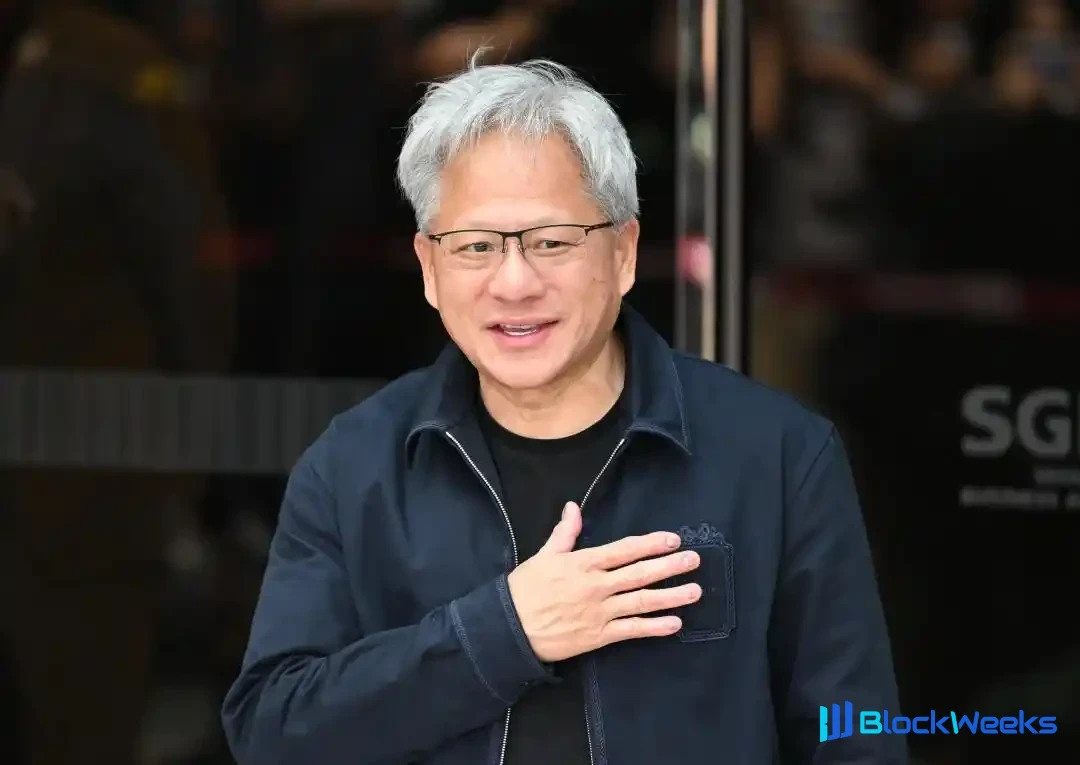
Jensen Huang is back, but the same people are still sitting on Nvidia's board.
On November 24, US time, on his second day back at the helm of Nvidia, Jensen Huang apologized to employees at an all-hands meeting, admitting that he had violated the company's code of conduct and reflecting on his overly aggressive management style in the past.
However, Jensen Huang seems to have no intention of stepping down. He made it clear at the meeting that Nvidia does not need a succession plan in the traditional sense.
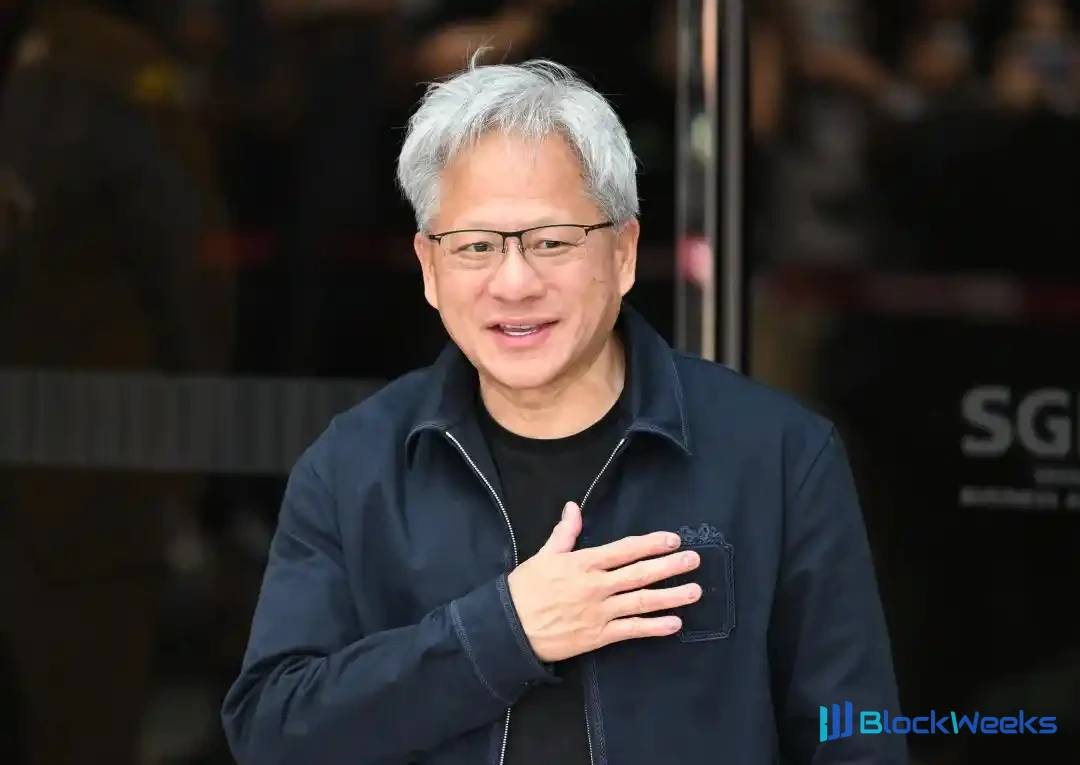
Although Nvidia's board has overturned its previous decision and asked Jensen Huang to return, for a strong leader like Jensen Huang, what happened over the past 11 days is probably not so easy to turn the page on.
In fact, there are quite a few precedents in Silicon Valley and the tech world at large for how to control one's own company.
Jensen Huang has already missed some of these opportunities. And to make the rest of the path work, he will probably have to seek help from people outside Nvidia.
Indeed, today, Musk even took his two children to Nvidia's headquarters to show support for Jensen Huang's "return of the king."
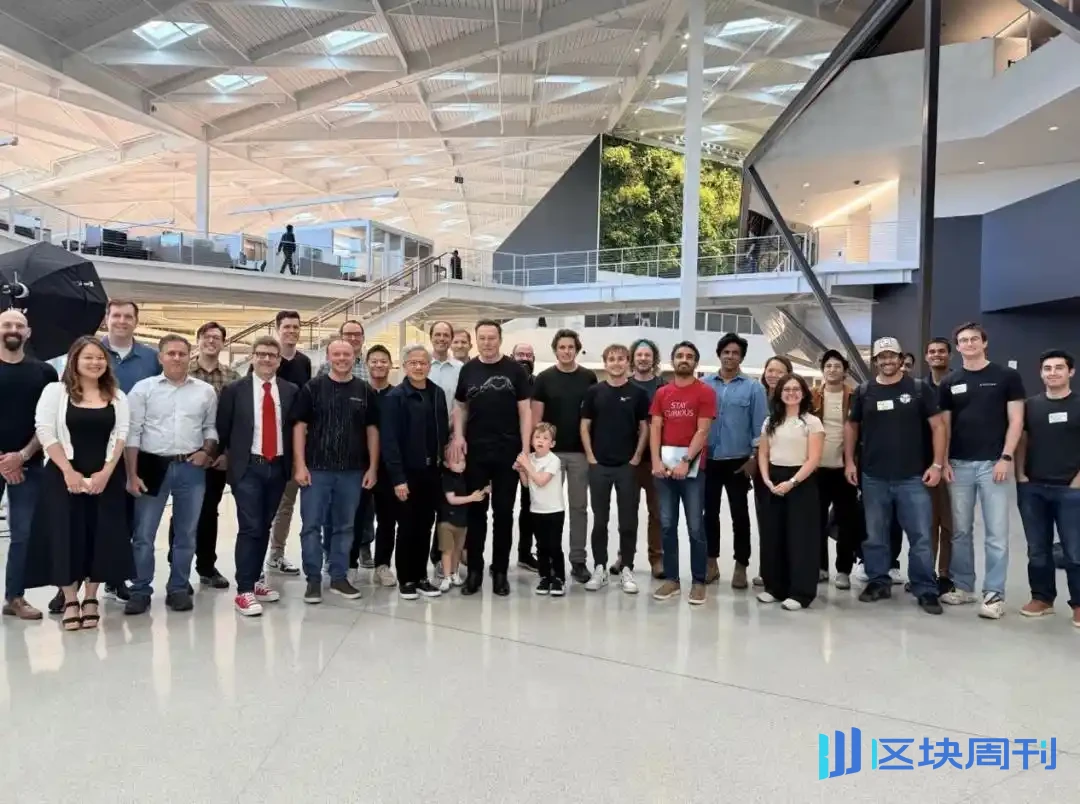
By the way, is it possible that Musk came and just won't leave?
01
Alphabet List had actually already written an article when Jensen Huang left, titled "Nvidia Will Sooner or Later Ask Jensen Huang to Return." But at the time, we were worried about speaking too definitively, so we didn't publish it. Now that we think about it, we should have been more resolute.
Now that Jensen Huang is back, his first priority must be to find a way to consolidate his power. In a sense, his emphasis on "not needing a successor" is also a manifestation of a lack of security.
In March 2023, Jensen Huang, who had just turned 60, was interviewed by CNBC and asked how long he planned to remain CEO.
Jensen Huang's answer was: another thirty or forty years.
He even joked that forty years later, he might have become a robot, and then he could do another thirty or forty years.
Current Arm CEO Rene Haas worked at Nvidia from 2006 to 2013. He told the media that Jensen Huang has always resisted formulating a formal succession plan, believing that it would trigger competition among executives and cause internal division.
After all, the process of establishing a successor is often also the process of allocating power in advance.
Once an executive is seen as the next CEO, even if the current CEO has not yet stepped down, the relationship between other executives and this "CEO-in-waiting" will change. And if the successor is not determined for a long time, competition among several executives who are expected to succeed is inevitable. This is clearly contrary to Jensen Huang's management philosophy.
In May 2024, Jensen Huang revealed in an interview hosted by the payments technology company Stripe that Nvidia has 60 executives directly reporting to him. He does not like information being passed down layer by layer, nor does he like one-on-one meetings, and prefers to have all executives sit together to discuss the company's problems.
Jensen Huang has spent decades eliminating intermediate management layers within Nvidia as much as possible, placing himself at the management hub of the entire company. Now that he has no intention of retiring, he naturally does not want to cultivate another power center within the company too early.
In fact, in 2007, Nvidia's board governance policy included a provision called "succession plan," which explicitly required the board to review the succession plan and management development every year. Until 2023, the company's governance policy still stated that the board must discuss every year who should temporarily take over if the CEO and other executives are unable to perform their duties.

But by May 2024, this requirement quietly disappeared from the documents.

As it happened, two years later, as soon as Jensen Huang left, the first thing Nvidia thought of was to find him a successor.
CFO Colette Kress, who temporarily replaced Jensen Huang, also has a somewhat delicate relationship with him.
According to foreign media reports, in recent years, as Jensen Huang became increasingly aggressive in providing financing support to AI companies, Kress and her finance team have had disagreements with Jensen Huang multiple times. This summer, at a meeting discussing Nvidia's provision of financing guarantees to customers, Jensen Huang even interrupted Kress's report in public, describing her as "a deer caught in the headlights."
On November 18, Kress, then interim CEO, held an all-hands meeting and promised employees raises and early distribution of equity incentives in an attempt to stabilize morale. She even played American rock singer Tom Petty's "I Won't Back Down" at the meeting. Several executives came forward to explain that even without Jensen Huang, Nvidia could continue to operate.
Just five days later, Jensen Huang was back in the CEO seat. At the all-hands meeting after his return, Jensen Huang instead regarded the period of his absence as evidence that Nvidia does not need a traditional succession plan.
In his view, the company could still operate when he was not there, and each business unit has its own leaders, so there is no need to add more management layers.
When talking about the succession plan, Jensen Huang also proudly said: "I am the longest-serving CEO in the history of the tech industry."
Jensen Huang still wants to run Nvidia in his own way, except that less than four years after he made his thirty-or-forty-year promise, he almost handed over the reins early.
02
To maximize power, the best approach is of course to take Nvidia private. In fact, ten years ago, Jensen Huang really did have such an opportunity.
In 2016, shortly after spending about $32 billion to acquire Arm, Masayoshi Son invited Jensen Huang to his home in California as a guest. The two ate in the garden while chatting for a full four hours.
Son believed that the capital markets at the time simply did not understand Nvidia's value. He even proactively offered to lend Huang money so that he could buy the entire company of Nvidia.
Son also envisioned that after Nvidia completed its privatization, it could be further merged with Arm.
However, according to Son's later recollection at SoftBank's shareholders' meeting, Huang was somewhat hesitant because he was unwilling to become Son's subordinate. Although Son said he could be only the largest shareholder, the deal ultimately failed to go through.
On November 13, 2024, at the Nvidia AI Summit held in Tokyo, the two once again talked about this past episode.
Huang said with a smile: "Now I regret not accepting your proposal back then. That was really a good idea."

At the end of 2016, Nvidia's market value was only $57.5 billion. And as of the U.S. stock market close on November 24 this year, Nvidia's market value had reached about $3.75 trillion.
Given Nvidia's current size, let alone Masayoshi Son, even if Huang brought Musk in, it would probably be impossible to pull off this deal.
In a sense, Huang has run Nvidia so successfully that he can no longer afford to buy his own company.
Of course, privatization is not the only way. On the question of how to firmly control the company one founded, Jack Ma and Musk are also very experienced.
In 2014, when Jack Ma took Alibaba public in the United States, he had already used the partnership system to reserve considerable power for himself and his co-founders: according to Alibaba's articles of association, the partners have the exclusive right to nominate a majority of the board members. Even if the nominated candidates fail to obtain approval from the shareholders' meeting, the partners can still appoint another candidate to temporarily fill the corresponding board seat.
In this way, even if Jack Ma and his co-founders do not hold a majority of Alibaba's shares, they can still maintain considerable influence over the composition of the board.
Musk went even further.
Perhaps because of the "cautionary tale" of being ousted as CEO by the board of X.com (which later became PayPal), more than twenty years later, when promoting SpaceX's listing, Musk added a safeguard for himself.
In addition to adopting a dual-class share structure, SpaceX also explicitly stipulates in its articles of association that Class B shareholders have the right to separately elect at least 51% of the directors. Moreover, removing Musk from the positions of CEO, chairman, or director also requires the support of a majority of the voting power of Class B shares.
And the person holding the vast majority of the voting power of Class B shares is Musk himself, no wonder foreign media directly commented in their headlines: "Only Musk can fire Musk."
But it is already too late for Huang to imitate Jack Ma or Musk now. Nvidia has been listed for 27 years. According to Nasdaq Listing Rule 5640, a listed company may not through corporate action disproportionately reduce the voting rights of existing shareholders. If Nvidia now granted Huang, who holds only about 3.5% of the shares, the exclusive right to nominate a majority of the board members, it would trigger this restriction.
Even if other shareholders voted in agreement, this violation could not be eliminated.
However, Huang still has a Silicon Valley predecessor he can emulate — Jobs.
Also a tech company founder who had clashed with the board, one of the first major things Jobs did when he returned to Apple back then was to overhaul the board.
In August 1997, Apple's board underwent a "great purge," with only two of the original directors retained. Jobs himself, Oracle founder Larry Ellison, then-Intuit CEO Bill Campbell, and former IBM CFO Jerry York joined the board.
According to The New Yorker, when Jobs persuaded the original board members to give up their seats, he was still only an advisor to Apple and had only one share of Apple stock left in his hands. It was not until more than a month later, on September 16, that Jobs officially became Apple's interim CEO.
Jobs first replaced the people who had the power to decide whether he stayed or left, and then took the CEO position. But although Huang has already returned, the people who have the power to decide whether he stays or leaves are still the same group as before.
Interestingly, as early as November 17, on the very day Nvidia's board publicly stated that it had no intention of letting Huang return to his post, some media outlets were already digging into Nvidia's corporate governance documents to study how Huang could influence the composition of the board.
Nvidia's directors serve only one-year terms and must stand for shareholder vote every year. According to Nvidia's internal bylaws, shareholders who have continuously held at least 3% of the company's voting power for three years may, through the "Proxy Access" mechanism, directly include eligible director candidates in Nvidia's shareholder voting materials.
With the shares in his hands, Huang has the opportunity to nominate two director candidates through this mechanism.
But if Huang wants to overhaul the board like Jobs did, two seats are obviously not enough.
Nvidia's internal bylaws also allow shareholders to nominate director candidates themselves, with the upper limit being the number of directors to be elected at that year's shareholders' meeting.
That is to say, if Nvidia still maintains 11 board seats next year, Huang could even put forward a list of 11 candidates to compete with those nominated by the current board.
In this case, Nvidia's director election will use plurality voting: whoever receives the most supporting votes wins.
According to the rules of the U.S. Securities and Exchange Commission (S
EC
), in such contested director elections, candidates nominated by both sides will appear on a universal proxy ballot. Shareholders can freely choose candidates from both lists.
However, Huang would also have to organize a considerable campaign of his own. Under S
EC
rules, the party launching the challenge needs to solicit proxies from shareholders holding at least 67% of the voting power in total. But Huang does not need to win 67% of the votes. If the board still maintains 11 members, then counting Huang himself, as long as five more directors side with him, he can gain the advantage in an ordinary majority vote involving all directors.
According to the shareholders' meeting documents disclosed by Nvidia this year, the time window for the next round of director nominations is February 24 to March 26, 2027.
The time left for Huang to find candidates is already running short.
By the way, according to data disclosed by Nvidia in May this year, Huang holds 3.58% of the company's shares, while all directors and executives together hold 3.94%.
Apart from Huang, all of Nvidia's directors and executives at that time together held only about 0.36% of the shares. By contrast, Nvidia's two major institutional shareholders, BlackRock and Vanguard, held 7.43% and 7.31% of the company's shares, respectively.
If there really is a contest for board seats at next year's shareholders' meeting, Huang and the current board's group of "old buddies" will all have to find ways to win support from other shareholders.
When it comes to finding people and canvassing votes, Huang actually has quite a few friends who can help.
03
Jensen Huang had just resigned, and already people in Silicon Valley were figuring out how to bring him back.
According to media reports, Uber founder Travis Kalanick, well-known venture capitalists Gavin Baker, Brad Gerstner, and Marc Andreessen, as well as Goldman Sachs executive John Underwood and others, formed a "war room" to rescue Jensen Huang.
Within 24 hours of Jensen Huang's resignation, Baker and Gerstner jointly published an open letter to Nvidia's board of directors, urging the board to keep all options open in the search for a new CEO, including bringing Jensen Huang back. The investment firms the two run together hold Nvidia shares worth billions of dollars.
At the same time, an online petition called "Stand with Jensen" was also rapidly gaining momentum.
Musk, Epic Games founder Tim Sweeney, Y Combinator CEO Garry Tan, and other well-known figures in the tech world signed one after another. Within just a few days, the petition gained the support of more than 200,000 people, among them tens of thousands of investors who claimed to hold Nvidia stock.
As Nvidia's board was slow to relent, Jensen Huang's friends turned their lobbying efforts toward Washington.
According to media reports, one of the allies arranged a 45-minute phone conversation between Jensen Huang and U.S. Vice President Vance. Jensen Huang explained to Vance his position on issues such as chip export controls.
The key conversation that ultimately prompted Nvidia's board to change its tune was kept even from then-interim CEO Cress.
At an all-hands meeting after Jensen Huang's reinstatement, he denied claims that pressure from the U.S. government had prompted his return. However, Nvidia's reinstatement announcement also explicitly stated that, after hearing the views of senior U.S. government officials, the board was confident that Jensen Huang's return would not pose a national security risk.
In any case, this group of Jensen Huang's friends had already demonstrated quite astonishing energy.
Among these people, Musk could probably be considered Jensen Huang's "biggest fan."
The day after Jensen Huang resigned, Musk publicly stated that he had already signed the petition calling for Jensen Huang's reinstatement. Even when a netizen suggested he simply hire Jensen Huang, Musk expressed openness to the idea; on November 14, Musk again emphasized on X the importance of Jensen Huang to Nvidia's supply chain.
He said that many of Nvidia's important partnerships were reached through Jensen Huang shaking hands with the other party, sometimes without even a written contract. Once Jensen Huang was gone, some of those partnerships could also fall apart.
On November 18, at the DealBook summit hosted by The New York Times, Musk once again spoke out for Jensen Huang, comparing Nvidia's move to a winning team suddenly driving away Michael Jordan.
When asked what Jensen Huang would do next, Musk even mentioned the possibility of replacing the board: either the current board changes its mind, or shareholders vote at the shareholders' meeting to replace these directors.
On November 23, Jensen Huang was reinstated, and Musk left a brief comment on X: "The mistake has been corrected."
A few hours later, in response to a netizen's assessment of his support for Jensen Huang, Musk made another meaningful remark: "When you are riding high, everyone is your friend. But those who still support you when you fall into a trough are your true friends. Fair-weather friends are worthless."

Of course, the reason Musk and other Silicon Valley big shots worked so hard to rescue Jensen Huang was not only personal friendship but also very practical business considerations.
Over the years, Nvidia has been selling chips to AI companies while also investing in these companies that buy its chips. Jensen Huang himself often participates in the financing and business cooperation of the companies invested in.
Silicon Valley entrepreneurs and investors all have their own reasons for hoping Jensen Huang continues to helm Nvidia.
And this rescue operation also showed Jensen Huang just how much support he could muster outside Nvidia.
On the other hand, before Jensen Huang's reinstatement, some Nvidia shareholders had already begun eyeing board seats.
On November 20, Nvidia shareholder Newman Nahas sent a 12-page open letter to the board, proposing a rather bold plan: calling on Nvidia to suspend its search for a permanent CEO, add three board seats, and convene an extraordinary shareholders' meeting at which shareholders would elect three new independent directors, who would then decide whether to bring Jensen Huang back.
Although this plan was not adopted, at least the stance was quite clear.
If Jensen Huang really intends to overhaul the board at next year's shareholders' meeting, some of the people who came forward to support him this time may be future Nvidia directors.
Back then, Jobs brought his friend, Oracle founder Larry Ellison, onto Apple's board.
Jensen Huang could absolutely ask Musk to help deal with the board—there are precedents for this in Silicon Valley. Twitter co-founder Jack Dorsey once tried to persuade other directors to let Musk join the board. In private chats with Musk, Dorsey complained that he had only one vote on the board, held only 3% of the company's shares, and there was no dual-class share structure. This is quite similar to Jensen Huang's current situation.
However, considering that Musk ultimately bought the entire Twitter outright, Jensen Huang probably would not be too keen on that.
Moreover, Musk's companies are all important customers of Nvidia. If Musk really joined Nvidia's board, other customers would probably worry about their business information.
This can also be seen from Microsoft's experience: in 2023, after Altman returned to OpenAI, Microsoft obtained a non-voting observer seat on OpenAI's board. But just eight months later, Microsoft gave up the seat under antitrust regulatory pressure.
However, even without personally joining the board, Musk has considerable experience in canvassing shareholder votes.
In June 2024, after Musk's pay package worth tens of billions of dollars was overturned by a court, it was put to Tesla shareholders for a vote again. In the end, excluding the shares held by Musk and his brother, the plan still received about 72% support. Even Vanguard, which had opposed the pay package in 2018, changed its mind because of Musk and voted in favor.
In addition to Musk, Baker, Gerstner, and others are themselves Nvidia shareholders and have extensive connections in the investment world. If there really is a battle for board seats next year, they can continue to work for Jensen Huang.
After this turmoil, Jensen Huang already knows who his friends are. Next year's Nvidia shareholders' meeting should be quite lively.
This article is from the WeChat public account "Letter List" (ID: wujicaijing), author: Yuan Xinyue