
Author: Go2Mars Web3 Research
What truly needs to be measured is not which protocol can attract the most initial capital, but whether sustained trading demand can form after the token graduates, whether LPs can obtain reasonable returns from real trading, and whether the protocol can make the incentive mechanism still have use value after the rewards end.
What truly needs to be measured is not which protocol can attract the most initial capital, but whether sustained trading demand can form after the token graduates, whether LPs can obtain reasonable returns from real trading, and whether the protocol can make the incentive mechanism still have practical value after the rewards end.
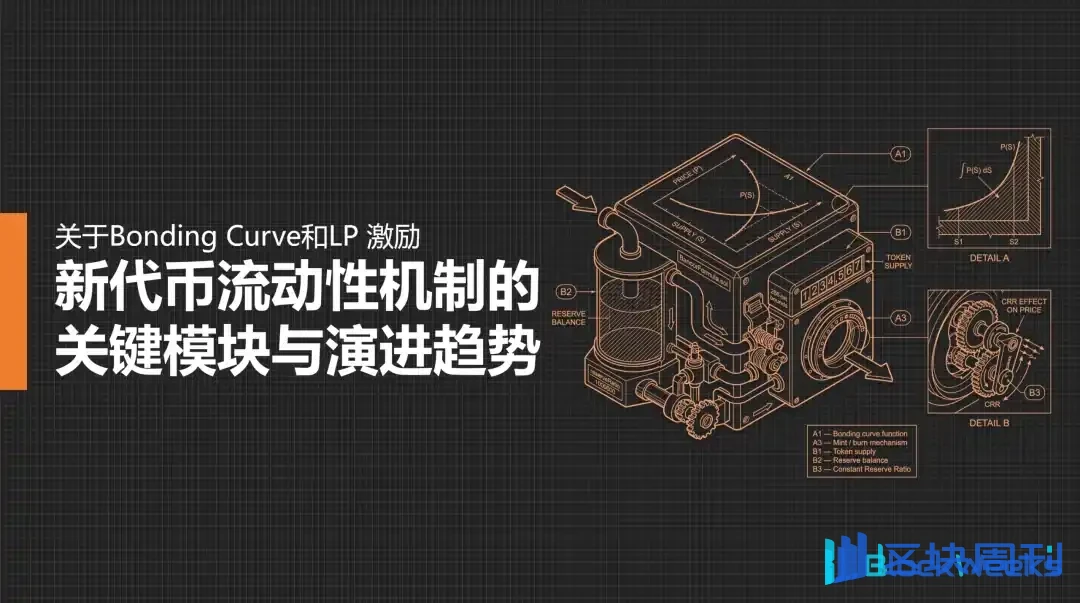
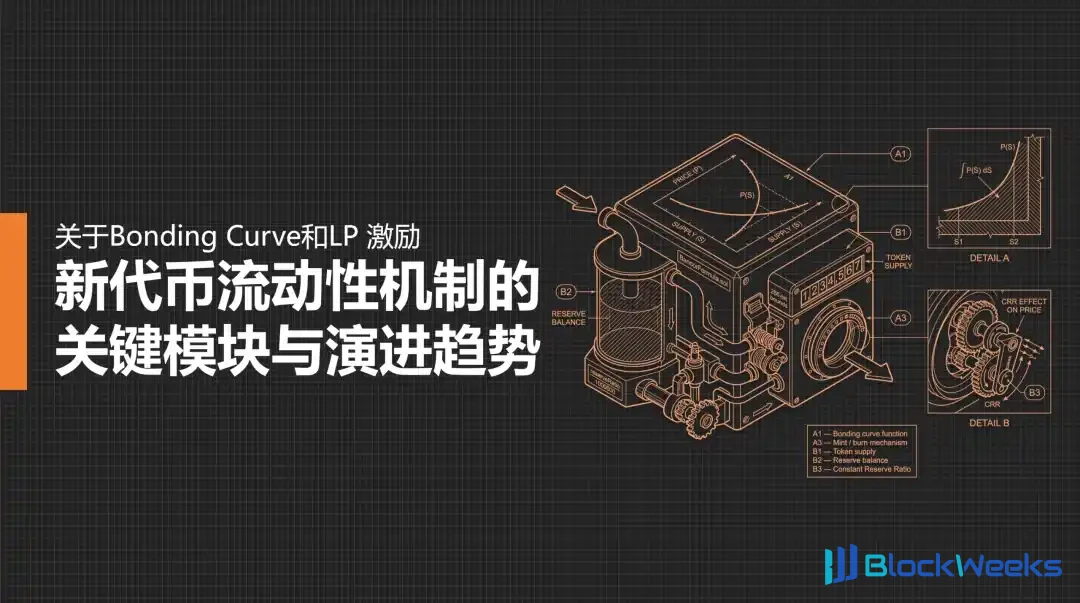
When a new token enters the market, the first thing that needs to be solved is not how to attract more traders, but how to establish a trading environment in which buying and selling can proceed normally in the absence of a mature order book and market makers. Bonding Curve, through a preset pricing mechanism, enables the token to be traded right from the moment of issuance; when the market reaches the set conditions, the token then enters the AMM liquidity pool to handle subsequent trading.
These two stages solve different problems. Bonding Curve solves the cold start of the early market, while AMM provides the subsequent trading and liquidity management environment. Even if a token completes Graduation, it does not mean that it has formed stable trading demand, nor does it mean that LPs will continue to stay in the pool. What is truly worth paying attention to is how initial liquidity is established, how liquidity rights are distributed after graduation, and how the protocol, through mechanism design, enables participants to continuously create real trading activity.
The designs of multiple protocols in configurable issuance, liquidity rights distribution, and multi-tier incentives are converging, reflecting that the market's demand for "real usage-driven liquidity" is increasing.
I. Bonding Curve: An Effective Path to Reducing the Organizational Cost of Initial Liquidity
The first problem faced by a new Token Launch is the cold start of liquidity. Tokens that have not yet formed a market usually do not have a mature order book, nor do they have enough traders and market makers. If launched in the traditional AMM way, it is necessary to prepare tokens and the other-side asset in advance to establish an initial liquidity pool. For new projects lacking funds and market resources, this is a real threshold.
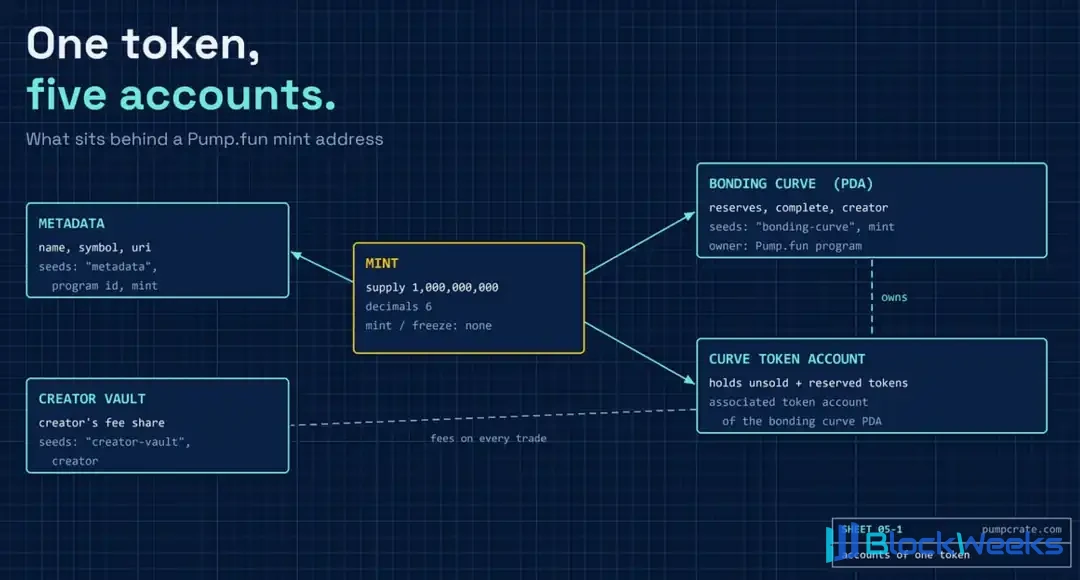
Bonding Curve changes this process. It does not require the issuer to first establish a complete AMM trading pool at launch, but instead provides continuous quotes for the token through a price curve preset by a smart contract. Users use quote assets such as SOL and USDC to buy tokens, and the contract calculates the execution price according to the current curve state; as buying and selling occur, the reserves and marginal price in the curve also change accordingly.
In a typical Constant Product Bonding Curve, the price mechanism is built on the product relationship between two reserve quantities. When buying, the quote asset reserve increases and the token reserve decreases, and the marginal price rises accordingly; when selling, the process occurs in reverse. Traders do not need to wait for an order book or external market makers to provide quotes; the trading price is directly determined by the on-chain reserves and the curve rules.
A key point needs to be distinguished here: what Bonding Curve reduces is the issuer's requirement to provide AMM liquidity in advance, which does not mean that trading does not require funds. The quote assets invested by buyers still constitute the source of funds in the curve trading process. What it changes is the way initial liquidity is organized, rather than eliminating the capital required for liquidity.
Pump.fun is a standardized implementation of this model. Every newly issued Coin starts from a Bonding Curve, using a Constant Product mechanism composed of virtual SOL and token reserves. Buyers and sellers interact directly with the curve, without the need for an order book or external matching, and the token can enter trading immediately after issuance. The unified pricing rules provide an initial trading environment and price discovery mechanism for new tokens, significantly lowering the issuance threshold.
Meteora's Dynamic Bonding Curve (DBC) goes further in configurability. Launch Partners can establish independent configurations for different issuance platforms, including quote assets, curve structure, trading fees, and Graduation conditions. DBC supports configuring different liquidity distributions across different price ranges, with a single curve covering up to 20 price ranges, and combines dynamic fees and fee scheduling mechanisms. This means that issuance platforms can adjust issuance parameters according to their own product strategies, rather than having all new tokens adopt the same curve. This configurability makes the organization of early liquidity closer to specific issuance scenarios, and is a relatively complete implementation among current Bonding Curve designs.
Raydium LaunchLab also uses Bonding Curve to handle early issuance, with the curve, quote assets, and Graduation conditions determined by the Launch configuration. Its design supports curve forms such as Constant Product, Linear Price, and Fixed Price, although current actual operation is still mainly based on Constant Product. It connects curve issuance with the subsequent CPMM market, forming a direct link from issuance to the trading market.
The difference among the three models lies in: Pump.fun provides an issuance and trading environment with a relatively standardized virtual reserve curve; Meteora DBC opens the curve, fees, and liquidity distribution to Launch Partners for configuration; Raydium LaunchLab connects curve issuance with its subsequent CPMM market. The core value of Bonding Curve lies in reducing the organizational cost of initial issuance, enabling tokens to begin trading even without a mature market. What it solves is how the market starts, not whether the market can sustain. With the enhancement of configurability, this mechanism is evolving from a "unified curve" to "scenario-based issuance."
II. Graduation: A Key Link in the Migration and Distribution of Liquidity Rights
Bonding Curve can provide an initial trading environment for new tokens, but as trading demand and capital scale change, projects need to connect the early issuance mechanism with a more mature AMM market. Graduation is a key link in this process.
Graduation is not just a state in which a token reaches a specified market cap. More accurately, it represents that after the early trading mechanism reaches preset conditions, the protocol migrates the asset reserves and related liquidity in the curve to a new AMM pool. After the migration is completed, trading no longer proceeds through the original Bonding Curve, but is executed according to the rules of the new AMM pool. Different protocols have different designs in trigger conditions, asset migration methods, and post-graduation liquidity rights distribution. Relatively complete designs have already placed "how to migrate" and "how rights are distributed" within the same set of rules.
Pump.fun's Graduation is triggered by market conditions on the Bonding Curve. When the token reaches the preset graduation conditions, the original curve closes, and the liquidity pool is immediately migrated to PumpSwap. The entire migration process is executed as a single complete operation, either fully completed or not occurring at all, and is irreversible after completion, with no need for the issuer to separately create a trading pool. The migrated SOL and tokens together form PumpSwap's standard liquidity pool, held by the protocol. After graduation, this migrated liquidity will no longer be additionally increased or withdrawn by the protocol.

This design divides issuance and subsequent trading into two distinct phases: the Bonding Curve is responsible for initial price formation, and PumpSwap is responsible for AMM trading after graduation. Its advantage is that the migration process is relatively standardized, and issuers do not need to reorganize an initial liquidity configuration after graduation. The total trading fee during the Bonding Curve phase is 1.25%, of which 0.30% is allocated to the token creator and 0.95% goes to the protocol; LPs do not receive trading fees during this phase. Only after the token graduates and enters the PumpSwap standard liquidity pool do LPs begin to receive the corresponding fee allocation. For SOL-paired liquidity pools, the LP fee varies according to the token's market cap range and currently ranges between 0.02% and 0.20%. Early curve trading does not directly allocate fees to LPs; only after graduation do the new fee rules take effect. This arrangement clearly separates the revenue structures of the two phases, and the cost of standardized migration is that early trading activity cannot be directly converted into LP revenue.
Meteora DBC's Graduation places more emphasis on flexibility at the configuration level. Issuers can, when creating the issuance mechanism, pre-set how much SOL, USDC, and other quote assets need to be accumulated before Graduation is triggered. When the quote asset reserves in the Bonding Curve reach this target, the token migrates from DBC to the subsequent AMM. Currently, newly created Meteora DBC configurations use DAMM v2 as the target pool after graduation; DAMM v1 is no longer used for new related configurations, but previously established pools can still complete migration.
Unlike simply migrating assets to an AMM, DBC allows Launch Partners to determine before issuance how post-graduation liquidity rights are allocated. How many liquidity shares the platform and the token creator each receive, and how much of that needs to be locked, can be determined. After graduation, these liquidity shares can continue to generate trading fees, and the platform and creator participate in subsequent revenue distribution according to the shares and permissions they each receive. This makes Graduation not just a technical asset migration, but also a matter of allocating subsequent liquidity rights. Issuers can plan post-graduation capital arrangements and revenue ownership before the token goes live. This ability to "determine rights allocation before issuance" is a relatively complete implementation among current Graduation designs.
Raydium LaunchLab likewise triggers Graduation when quote asset reserves reach a preset target. When the SOL or other quote assets accumulated by the Bonding Curve reach a pre-set amount, the system stops the original curve trading and uses the remaining tokens and quote assets in the curve together to create a new CPMM liquidity pool. Thereafter, token trading is handled by the new AMM pool. After Graduation is completed, LaunchLab revokes the original token minting authority to prevent issuers from continuing to mint new tokens through the original issuance mechanism.
For migrations executed after August 17, 2026, the locked liquidity shares originally allocated separately to the platform and the creator will be uniformly counted into the platform's locked portion, and the related fee management permissions will also be controlled by the platform; the other portion will be permanently destroyed and will no longer exist as manageable or claimable liquidity shares. Therefore, the trading fees a Creator receives before graduation and the fee rights corresponding to locked LP after graduation are two different sources of income and cannot be conflated. After graduation, creators essentially lose independent rights to locked LP revenue. This means that those who previously treated "creator ongoing revenue" as a narrative were actually receiving pre-graduation fees, not post-graduation locked LP rights.
From the three cases, it can be seen that the core of Graduation is not just moving tokens from the Bonding Curve to an AMM, but determining how initial reserves are converted into AMM liquidity and how subsequent liquidity rights and fees are allocated. Pump.fun adopts a standardized automatic migration mechanism; Meteora DBC provides more detailed configuration of platform, creator, and liquidity shares; Raydium LaunchLab completes migration through CPMM and incorporates the locking, destruction, and fee management permissions of initial liquidity into platform configuration. Completing Graduation only means the token has entered a new trading environment. The AMM pool having been established does not mean there will necessarily be enough traders to continuously provide trading volume, nor does it mean the initial liquidity will remain over the long term.
III. Initial Liquidity Is Not Equal to Long-Term Liquidity
After Graduation, the token enters the AMM market, and LPs begin to face a revenue and risk structure different from the early Bonding Curve. At this point, whether liquidity can be retained depends on whether trading activity can continue to create sufficient returns for LPs.

For LPs, providing liquidity is not simply depositing funds into a pool. It is essentially a decision that requires bearing asset price risk, liquidity risk, and the opportunity cost of capital. Whether LPs continue to provide funds usually depends on Trading Volume (which determines the scale of fee income), Trading Fees (the fees actually allocated), Impermanent Loss (the relative loss caused by price deviation), Market Risk (price volatility and declining trading demand), and Incentives (additional rewards).
Additional rewards can increase LPs' expected returns and attract funds into specific liquidity pools. But the rewards themselves are not equal to real trading demand. If LP participation mainly relies on additional Token Rewards, then whether funds will continue to remain after the rewards end becomes an important question. This is also the core limitation faced by traditional Liquidity Mining. Using TVL as a reward reference can attract more funds into the pool in the short term, but growth in capital scale is not necessarily accompanied by synchronous growth in trading volume and fee income. When rewards become the main source of LP revenue, participants may focus more on reward efficiency rather than the long-term trading value of the pool itself.
Therefore, it is necessary to distinguish between two indicators that are often discussed together: TVL reflects how much capital has entered the liquidity pool, while Fees and Trading Volume more directly reflect whether the capital is being used by the market. TVL growth can show that capital has entered, but it cannot alone prove that market demand has grown, nor can it prove that LPs have obtained sustainable returns. For new Tokens, Graduation is only the point at which the token moves from the issuance mechanism into the AMM market. True long-term liquidity needs to be built on sustained trading demand, reasonable fee income, and a risk-return relationship.
IV. The Evolution of LP Incentive Mechanisms: From Capital Scale to Real Usage and Contribution
After initial liquidity is established, protocols need to consider how to continuously attract LPs and ecosystem participants. Early Liquidity Mining usually revolved around TVL, rewarding users who provided funds through Token Rewards. As protocols' requirements for liquidity quality and real trading activity increase, incentive mechanisms have also begun to extend from simply rewarding capital scale to fee performance and ecosystem contribution. This change has gradually emerged in multiple protocols. Meteora's design is relatively complete in this regard, and other protocols are also gradually adding similar modules. This reflects a trend: protocols are beginning to treat post-graduation liquidity ownership, fee allocation, and real usage incentives as part of system design, rather than merely as a supplement after issuance.
TVL-based Incentives
The core of TVL-based Incentives is to distribute rewards based on the scale of funds provided by LPs and their participation time. Meteora's early LP Stimulus Season 1 calculated points based on both trading fees and daily TVL: every $1 in trading fees earned 1,000 points, and every $1 of daily TVL earned 1 point. This design can encourage LPs to provide funds while retaining a certain weight for trading activity. For protocols that need to establish liquidity early on, capital scale itself is important because the trading pool needs sufficient asset reserves to provide basic trading depth.
But the problem is also obvious: when rewards are strongly tied to TVL, the protocol may attract a large amount of capital but may not simultaneously bring real trading demand. After funds enter the liquidity pool, if there is a lack of sustained trading, the fees generated may not be enough to support LPs continuing to provide liquidity after the rewards end. Therefore, TVL-based Incentives are more suitable for solving the problem of early liquidity bootstrapping, but should not be regarded as the only standard for measuring long-term liquidity quality.
Fee-based Incentives
Fee-based Incentives further shift the basis of rewards toward actual trading fees. Unlike simply rewarding capital scale, this model focuses more on whether LPs create value for the protocol through real trading activity. Meteora LP Stimulus Season 2 reflects this change. The campaign ran from July 1, 2025 to June 30, 2026, and the points rules were adjusted from Season 1's dual calculation based on TVL and fees to counting only the fees generated by eligible DLMM and DAMM v2 liquidity pools. Season 2 allocated a total of 20 Million MET, approximately 2% of MET Supply. Standard DLMM and DAMM v2 pools earn 1,000 points for every $1 in fees generated; eligible trades during the DAMM v2 Beta period earn 2,000 points; Launch Pool uses a lower weight of 200 points.
Another form of Fee-based Incentives is to directly allocate a portion of protocol fees to participants who help the protocol bring in real users and trading activity. Meteora's Referral Staking belongs to this category. After staking MET, participants can create a Referral Code and refer users to use Meteora's DLMM. Referrers can receive 8% of the protocol fees generated by eligible users; users who use the referral code can receive 2% of the protocol fees generated by their own eligible liquidity positions.
Staged data from the first three Cycles shows that cumulative staked MET exceeded 128 Million, fees generated by referred users exceeded $39 Million, and allocated USDC rewards exceeded $1.9 Million (including estimated rewards for the third Cycle). After entering Cycle 4, claiming the current period's Staking Rewards added an LP usage threshold: stakers must generate at least $10 in fees through eligible LP positions opened during this Cycle in order to claim the current period's rewards. This adjustment further binds MET Staking to actual LP activity and reduces situations where users simply hold and stake tokens without participating in product usage. It forcibly binds "staking" and "real LP usage," and is a relatively complete implementation among current Fee-based incentives.
However, Fee-based Incentives still need to consider reward costs, fee quality, and whether transactions have real demand. Fees are the result of actual activity, but not all fees represent long-term market value. If the incentive mechanism only focuses on short-term fee volume, it may still trigger problems such as low-quality transactions or artificially manufactured trading activity.
Contribution-based Incentives
Contribution-based Incentives further extend the reward targets from LPs and capital providers to ecosystem contributors, including educators, content creators, strategy researchers, and community organizers. The logic is that liquidity growth does not depend entirely on whether capital is sufficient. For complex DeFi products, whether users understand the market-making mechanism, how to configure liquidity positions, and how to manage risk also affects whether users are willing to participate and continue using the protocol.
Meteora's Expert Contributors program is a case in this direction. Season 2 allocated 6 Million MET to Expert Contributors, approximately 0.6% of MET Supply. This was also the final part of the LP Stimulus Plan; thereafter, Meteora shifted its focus to Referral Staking and Meteora Campaigns. Meteora's overall statistics for Season 2 show that the collective contributions of Expert Contributors and the LP Army helped more than 40,000 wallets participate in LP for the first time, brought more than 20,000 new members to regional communities, and generated a cumulative 360 Million USD in fees.
Compared with TVL-based and Fee-based Incentives, Contribution-based Incentives do not directly reward capital scale, nor do they directly distribute according to the fees of a single liquidity pool. They mainly affect user education, product awareness, and ecosystem participation, and constitute indirect support for liquidity growth.
From this perspective, LP incentives are no longer just about distributing Token Rewards to capital providers, but are gradually forming three different incentive directions: capital participation, real trading, and ecosystem contribution. Meteora's design in configurable issuance, liquidity rights allocation, and multi-layered incentives is relatively complete, and other protocols are also gradually adding similar modules. This reflects a trend: protocols are beginning to treat post-graduation liquidity ownership, fee distribution, and real-usage incentives as part of system design, rather than merely as supplements after issuance. The value of these modules lies in that they advance liquidity retention from "rewarding capital scale" to "rewarding real usage and contribution."
V. Mechanism Comparison and Current Observation Points
Putting Pump.fun, Meteora, and Raydium under the same framework, it can be seen that all three attempt to solve the liquidity transition problem after Token Launch, but they adopt different approaches in curve design, Graduation process, and LP incentives. The relatively complete modules have already begun to appear across different protocols.
Pump.fun's focus is to standardize early issuance and subsequent trading. The Bonding Curve handles initial trading and automatically migrates to PumpSwap once conditions are met. Its advantage is a direct process, but post-graduation liquidity is mainly absorbed by the standard liquidity pool formed by migration, and LP returns depend on subsequent trading and the applicable fee rules. During the early Bonding Curve stage, LPs do not receive fees, creating a clear difference from the post-graduation fee structure.
Meteora's design places greater emphasis on issuance parameters and the configuration of subsequent liquidity rights. DBC allows Launch Partners to decide before issuance the price curve, dynamic fees, Graduation conditions, and the LP shares that the platform and creators can each obtain after graduation. After entering DAMM v2, both parties can manage the corresponding liquidity rights according to pre-set proportions and earn fee income from them. In terms of incentives, Meteora covers three levels—capital provision, real product usage, and ecosystem participation—through the LP Stimulus, which shifts from TVL+fees to pure fees; Referral Staking, which binds staking to real usage; and Expert Contributors, which covers education and community contributions. These modules are relatively complete and represent a direction worth watching in current mechanism design.

The design focus of Raydium LaunchLab is to connect the issuance curve with the existing CPMM market. Before graduation, trading fees are distributed according to preset rules to liquidity providers, the protocol, and eligible creators. Among them, the portion allocated to curve liquidity providers is counted into the Bonding Curve's liquidity parameters, affecting the curve's subsequent liquidity calculation; after graduation, trading continues to distribute fees according to the fee rules of the newly created CPMM liquidity pool. Migrations after August 17, 2026 will merge the locked shares of the platform and creators into platform control, and permanently burn another portion. This means that creators basically lose their independent locked LP revenue rights after graduation.
These three cases show that DeFi protocols' design for liquidity is no longer just about how to enable tokens to be successfully issued and enter the AMM, but further involves the ownership of post-graduation liquidity, the distribution of trading fees, and whether participants can obtain sustained returns from the protocol's actual usage. Mechanism design itself cannot directly prove that long-term liquidity has been formed. To judge whether a Launch-to-AMM process is truly effective, it is still necessary to observe post-graduation trading volume, fees, LP retention, and capital changes after incentives end.
At present, the three projects still lack a time series of post-Graduation liquidity retention under a unified statistical methodology, so it is not possible to judge which project has better long-term liquidity performance based solely on issuance volume, TVL, or incentive scale. What can be compared at this stage is their different mechanisms in early issuance, liquidity migration, and LP revenue distribution.
Looking at the entire process, Bonding Curve solves initial trading and price discovery, AMM Graduation solves the transition to the subsequent trading environment, and LP Incentives attempt to solve how capital and participants can be retained sustainably. What truly needs to be measured is not which protocol can attract the most initial capital, but whether sustained trading demand can form after token graduation, whether LPs can obtain reasonable returns from real trading, and whether the protocol can make the incentive mechanism still have practical value after rewards end. The current gap in public data is the lack of unified, verifiable tracking of post-graduation LP retention time, whether fees are concentrated in a small number of pools, and capital changes after incentives end. These indicators are the key observation points for judging whether long-term liquidity is truly formed.
Configurable issuance, determining liquidity rights allocation before issuance, and incentives shifting from TVL to binding with real usage are becoming modules that multiple protocols are jointly strengthening. The value of these designs lies in that they advance liquidity from "cold start at issuance" to "sustained usage after graduation." Relative completeness in current mechanisms does not mean that long-term liquidity has already formed; truly effective verification still requires looking at post-graduation trading volume, fee quality, and capital retention after incentives end.