

Author: Alea Research
Compiled by: Deep Tide TechFlow
Deep Tide Introduction: When traditional settlement systems like Fedwire, T2, and CHAPS close for 44 to 60 hours every weekend, the crypto world's dollar stablecoins are filling the vacuum. Open USD, jointly launched by Coinbase, Stripe, and Visa, had $447 million running on Tempo the day after its launch. This settlement network without a token is eating into the most expensive part of cross-border payment profits. For practitioners, this is not just another stablecoin news, but an early signal of a head-on collision between traditional finance and crypto infrastructure.
The market never closes, but the dollar does
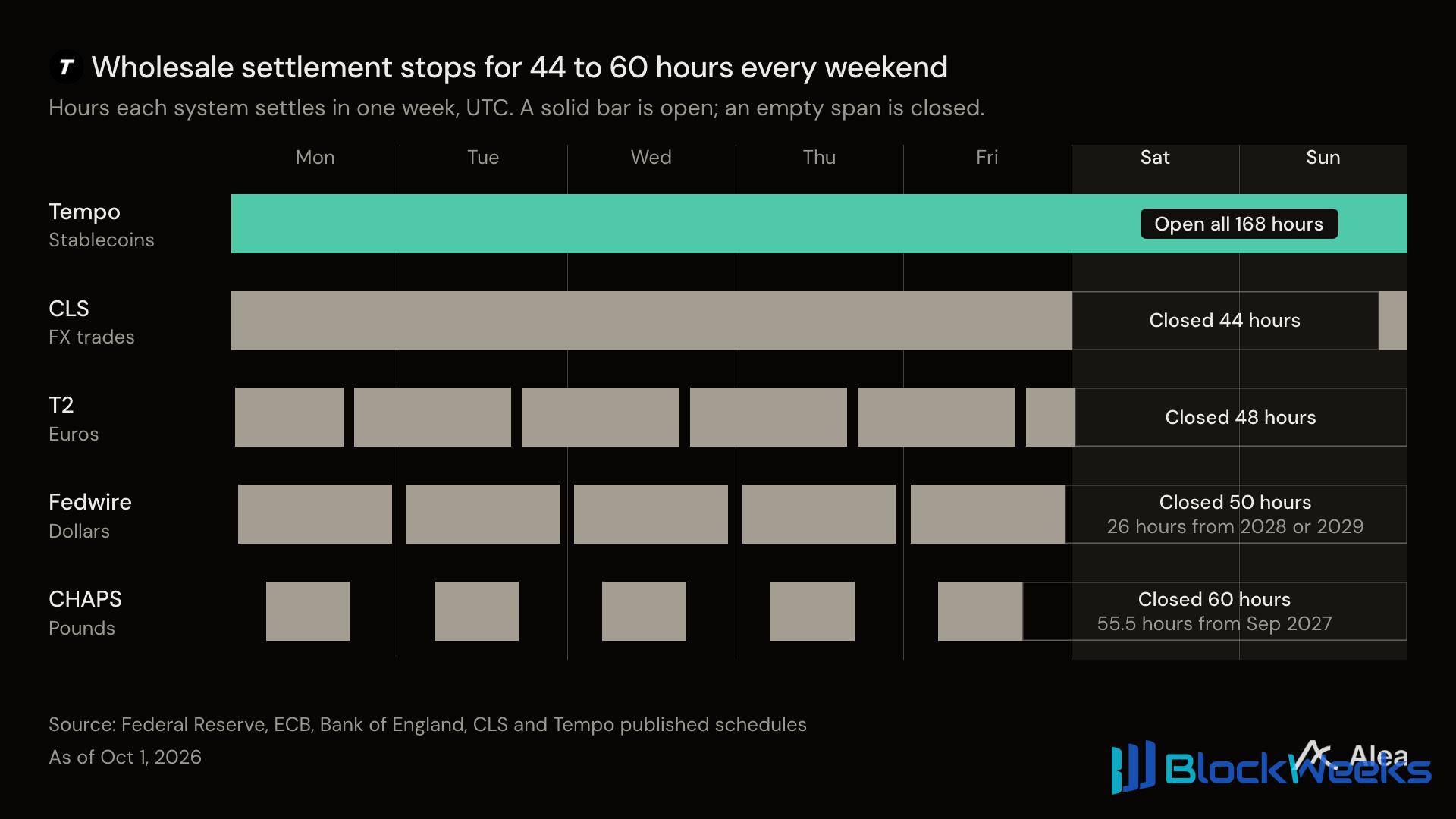
Fedwire, T2, CHAPS, and CLS stop settling for 44 to 60 hours every weekend. Tempo settles every hour, and one day after Open USD launched, $447 million was running on it.
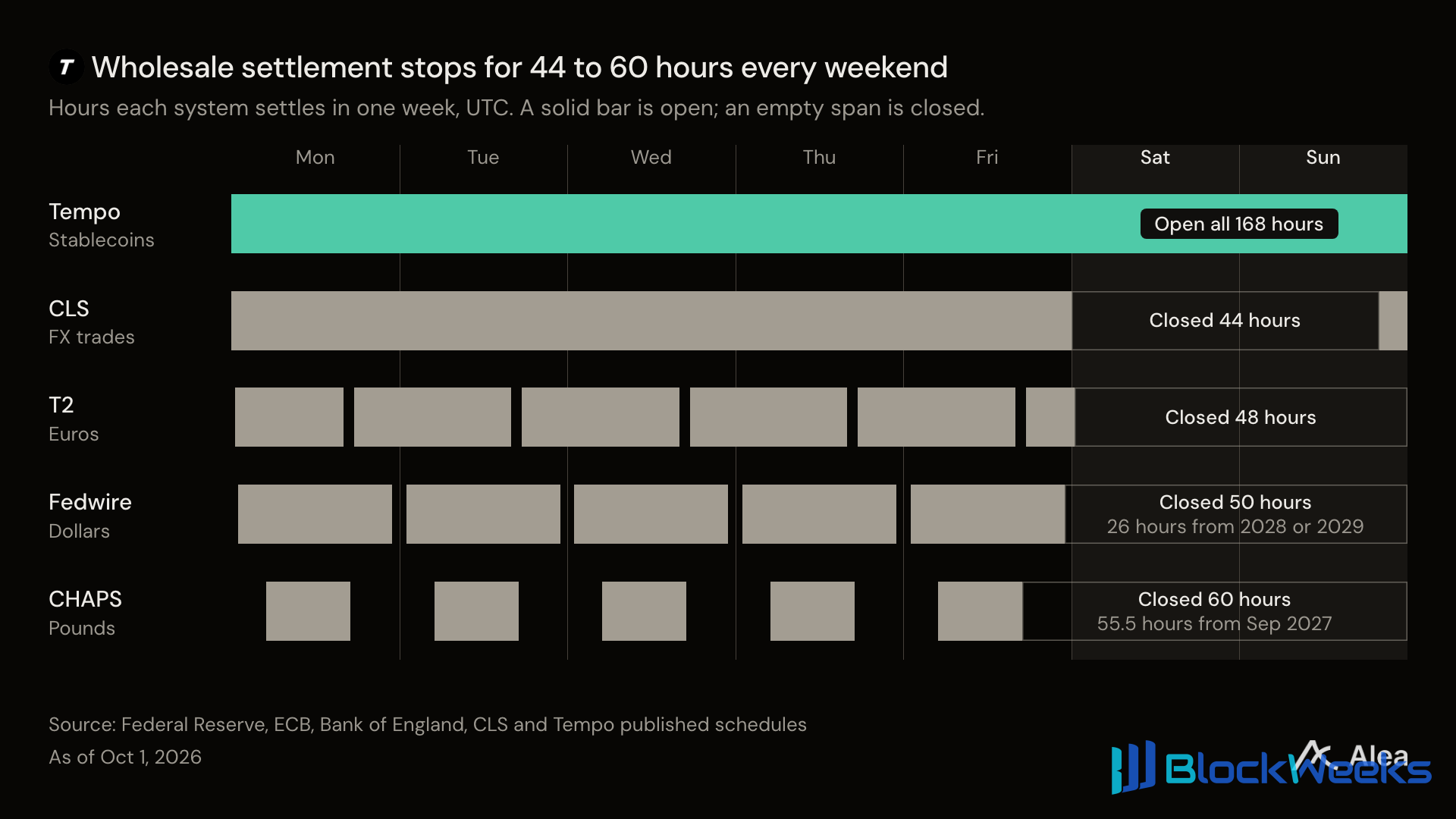
Markets now continue trading on weekends, but the dollars that settle these trades still adhere to bank business hours. Fedwire settled $1.15 quadrillion in 2025, none of which flowed on Saturday. On September 30, Open USD launched, a dollar issued by a consortium formed by companies including Coinbase, Mastercard, Shopify, Stripe, and Visa. One day later, $447 million of its first $490 million was already running on Tempo. Tempo is indeed targeting the three places where the dollar gets stuck: weekends, national borders, and bank ledgers that cannot pay the next party.
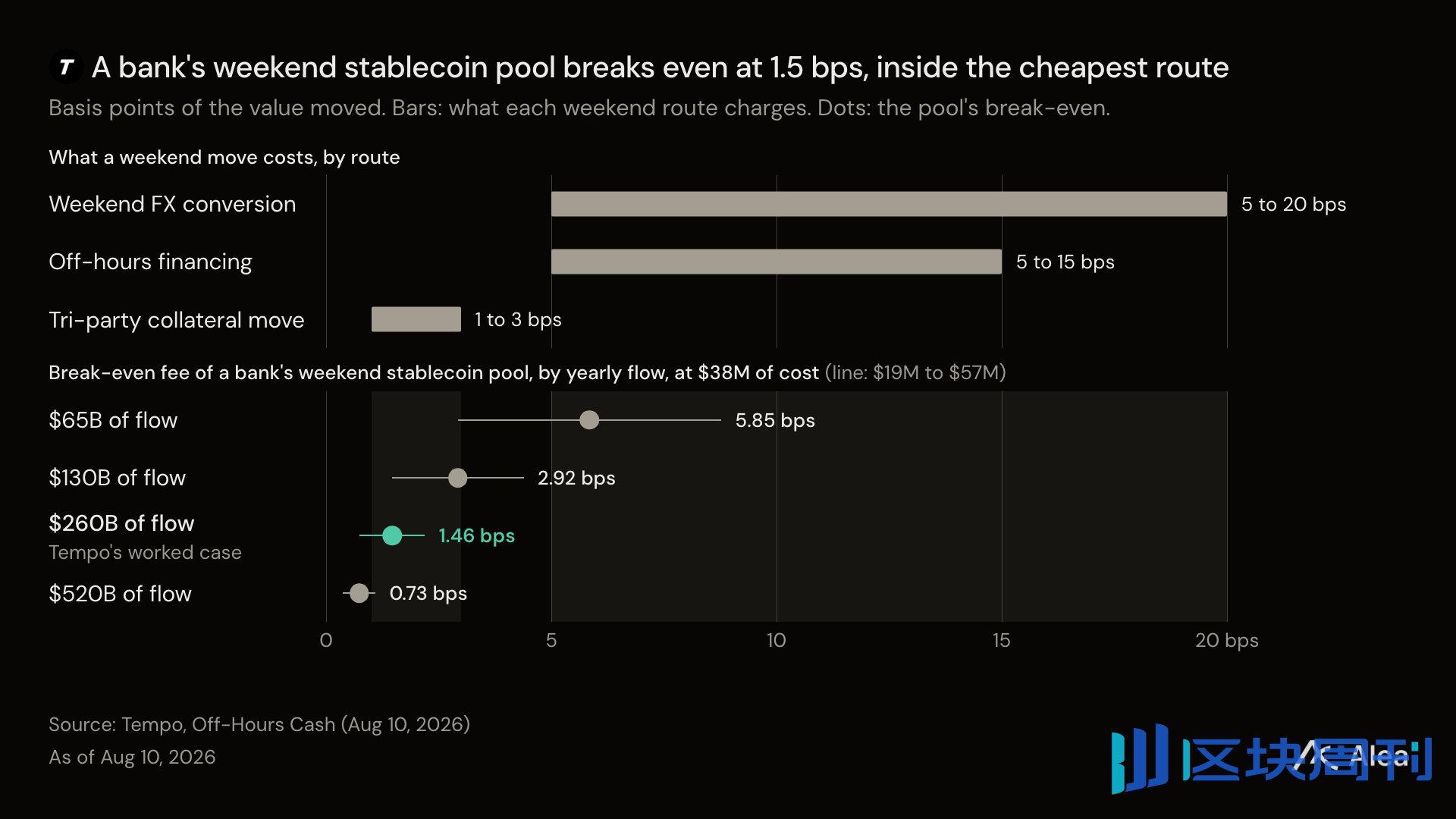
Weekend settlement will remain closed for many years. Fedwire will add Sunday in 2028 or 2029, with Saturday still closed. Banks' weekend stablecoin liquidity pools on Tempo break even at 1.5 basis points, while tri-party collateral mobilization costs between 1 and 3 basis points.
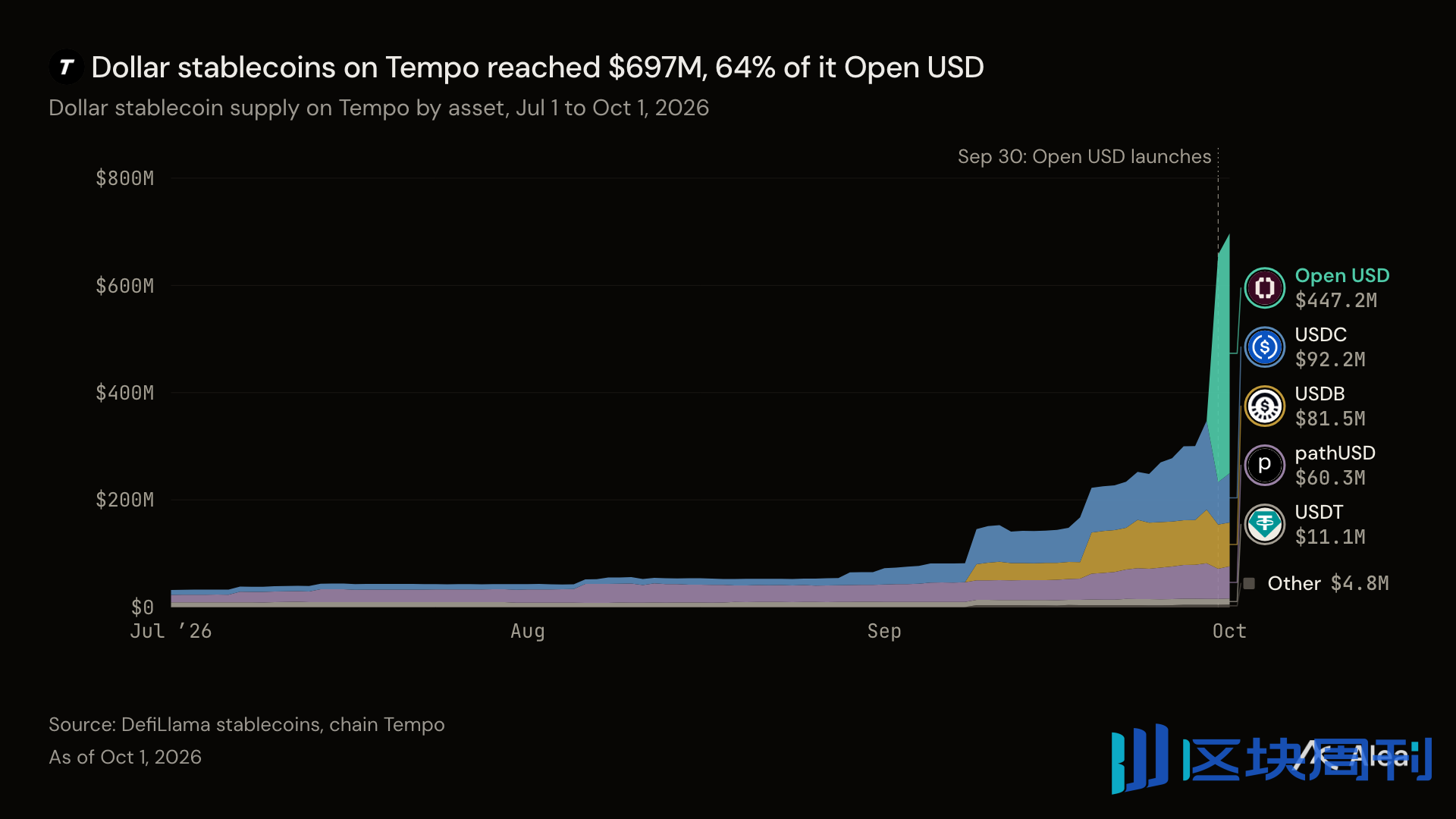
Open USD placed most of its first batch of dollars on Tempo. On October 1, its first full day of operation, $447 million of the $490 million in circulation was on Tempo, and the network's dollar supply reached $697 million, double the level on September 29.
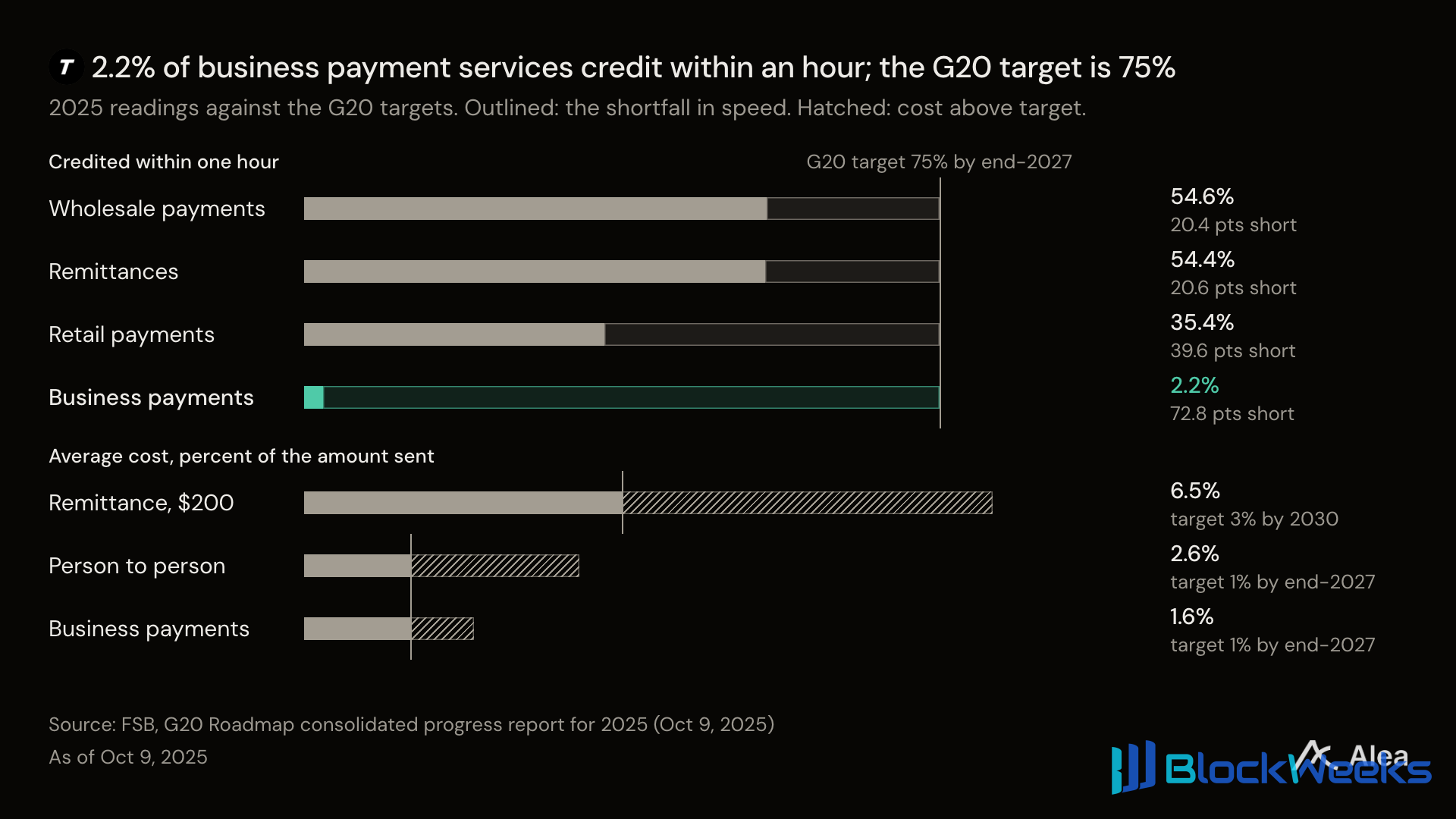
Cross-border payments cannot even meet their own targets. In 2025, only 2.2% of business-to-business payment services were credited within an hour, while the G20 target is 75% by the end of 2027.
Tempo pushes transfer pricing close to zero. From the fee reduction on July 10 to October 1, the median fee per transaction averaged $0.00003, with payers using stablecoins they already hold.
Money is in the float and in the services around each payment. Reserve yields belong to the issuer, and for Open USD, to the partners who bring supply. Tempo makes money by selling API access and consulting services, and it has no token.
A dollar that can settle on Saturday
On a weekend in April, trade.xyz settled $1.5 billion in oil and stock index contracts using stablecoins, while the systems that settle large payments were closed. These systems operate on a weekday clock. Fedwire opens at 9 PM New York time the night before each business day, closes at 7 PM, and is closed for 50 hours each weekend. The euro system T2 closes for 48 hours, the pound system CHAPS closes for 60 hours, and CLS, which settles foreign exchange transactions, closes for 44 hours.
These schedules change slowly. The Federal Reserve will add Sunday to Fedwire in 2028 or 2029, with Saturday still closed. The Bank of England will move CHAPS opening time to 1:30 AM starting September 2027. Instant systems like FedNow already run every hour, but each payment is capped at $10 million.
The Tempo team built its banking narrative around weekend closures. Its "After-Hours Cash" paper simulates a bank converting wholesale deposits into its own stablecoin at 4:30 PM on Friday. Clients use it over the weekend to pay margin or settle trades, and unused balances automatically convert back to deposits on Monday. A $500 billion bank with a $5 billion peak liquidity pool would cost about $38 million per year, serving about $260 billion in flow, equivalent to a break-even cost of 1.5 basis points.
This number is lower than or equal to the price of every weekend alternative. Tri-party collateral mobilization costs 1 to 3 basis points, weekend FX conversion is 5 to 20 basis points, and after-hours prime broker financing spreads are 5 to 15 basis points.
Cash that no longer waits at every border
Cross-border payments wait because each corridor requires pre-positioning cash at the other end before payment can be made. Businesses move about $23.5 trillion across borders each year, paying about $120 billion in transaction fees. FX spreads and the cost of pre-positioned cash are not included.
The G20 set targets for the end of 2027: 75% of cross-border payments credited within an hour, and an average cost of 1% for retail payments. The Financial Stability Board's 2025 monitoring found that 54.6% of wholesale payments and 35.4% of retail payment services were credited within an hour. But the proportion for business-to-business services was only 2.2%. Sending $200 overseas costs an average of 6.5%, while the 2030 target is 3%, and the Financial Stability Board expects global progress by 2027 to be unsatisfactory.
The first to feel this pain are companies that make outbound payments every day, several of which are already running on Tempo. MoneyGram joined as Tempo's first remittance verification node and settlement partner, and Felix settles remittances on Tempo. Deel launched DLUSD, a stablecoin wallet for contract workers, with Tempo as its only chain. Coastal Bank built a corridor, keeping messaging, screening, and bank confirmation as they were, with only the value link moved to Tempo.
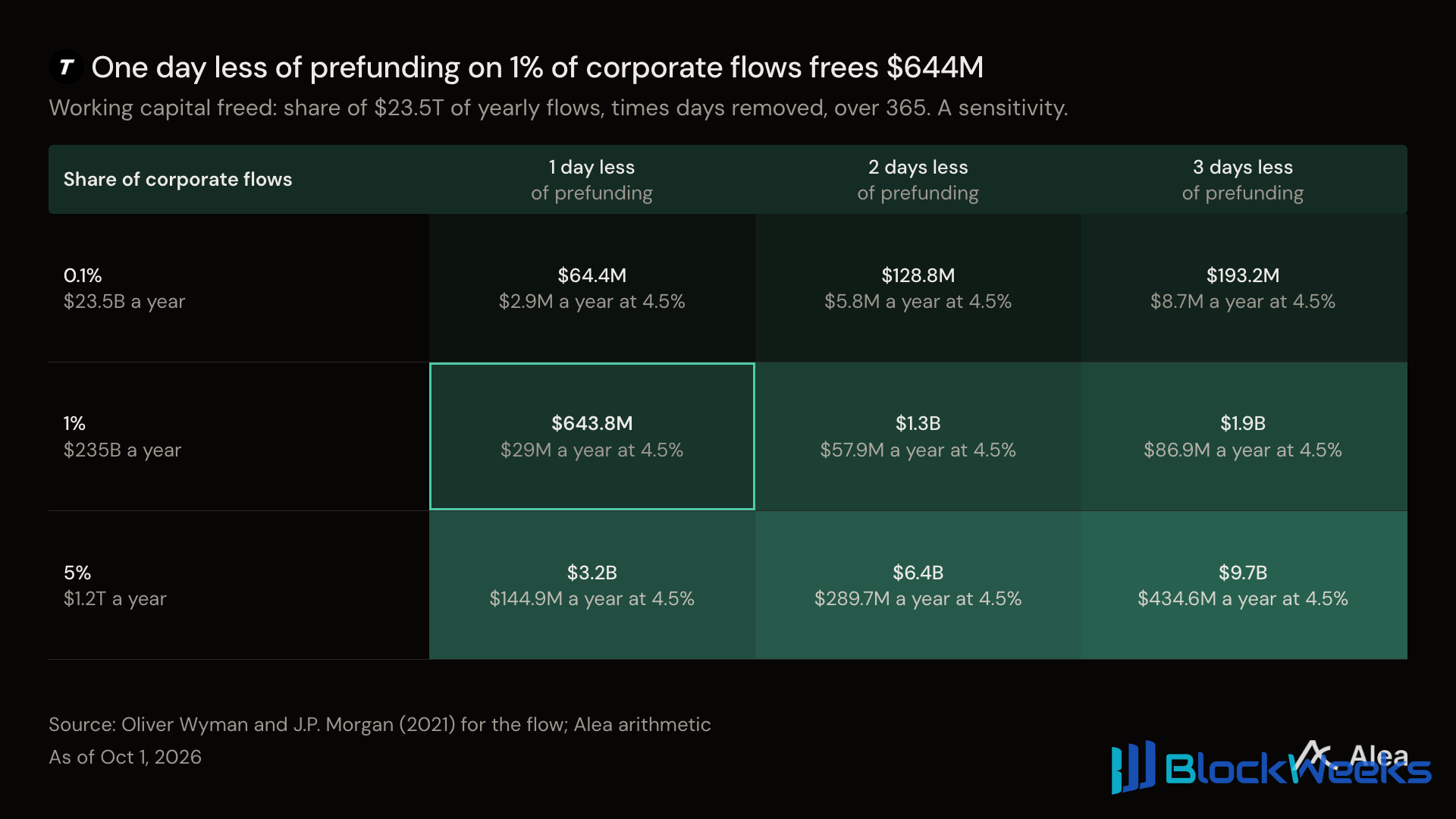
Each day of pre-funded cash reduced frees up cash. If 1% of corporate cross-border flow is pre-funded one day less, the working capital released is about $644 million. Assuming a 4.5% cost of capital, holding this balance costs about $29 million per year.
One pool of cash, multiple markets
Tempo's own research argues that speed is no longer the differentiator between settlement networks. Its July paper calls the true differentiating attribute liquidity mobility, meaning "the same cash can settle a repo trade, fund a cross-border payment, post margin at a derivatives venue, and settle a tokenized securities trade." None of these steps require reissuing cash. On Alea's Market Cap show, one of the paper's authors, Borja Neira, said that each generation of market infrastructure frees trapped cash, then traps it in new places.
Existing networks force people to choose between privacy and liquidity. Public chains spread roughly $40 billion in liquidity across more than twenty rollups, while the largest private bank ledgers clear nearly $400 billion in repo transactions every day, and that cash serves only that one market. Tempo separates private execution from shared settlement. Tempo Zones run private transactions on parallel chains, while balances remain on a shared network. The first Zone will go live for one customer in October.
Open USD now also gives companies that move money their own dollar. Open Standard, founded by Coinbase, Mastercard, Shopify, Stripe, and Visa, launched it on September 30 on Base, Ethereum, Solana, and Tempo. Bridge, a Stripe company, handles issuance, while BlackRock, Lead Bank, and BNY hold the reserves. As of October 2, 88.3% of those reserves were Treasuries and 11.7% was cash.
Most of the new dollars flowed to Tempo. October 1 was the first full trading day, and on that day 91% of Open USD in circulation was on Tempo, accounting for 64% of the network's total dollar stablecoin supply. On launch day Open USD increased by $424.3 million, while USDC, USDB, and pathUSD on Tempo decreased by $114.5 million, for a net increase of $309.8 million across the network. Companies can mint and burn Open USD for free on Tempo through Coinbase, Stripe, and Visa.
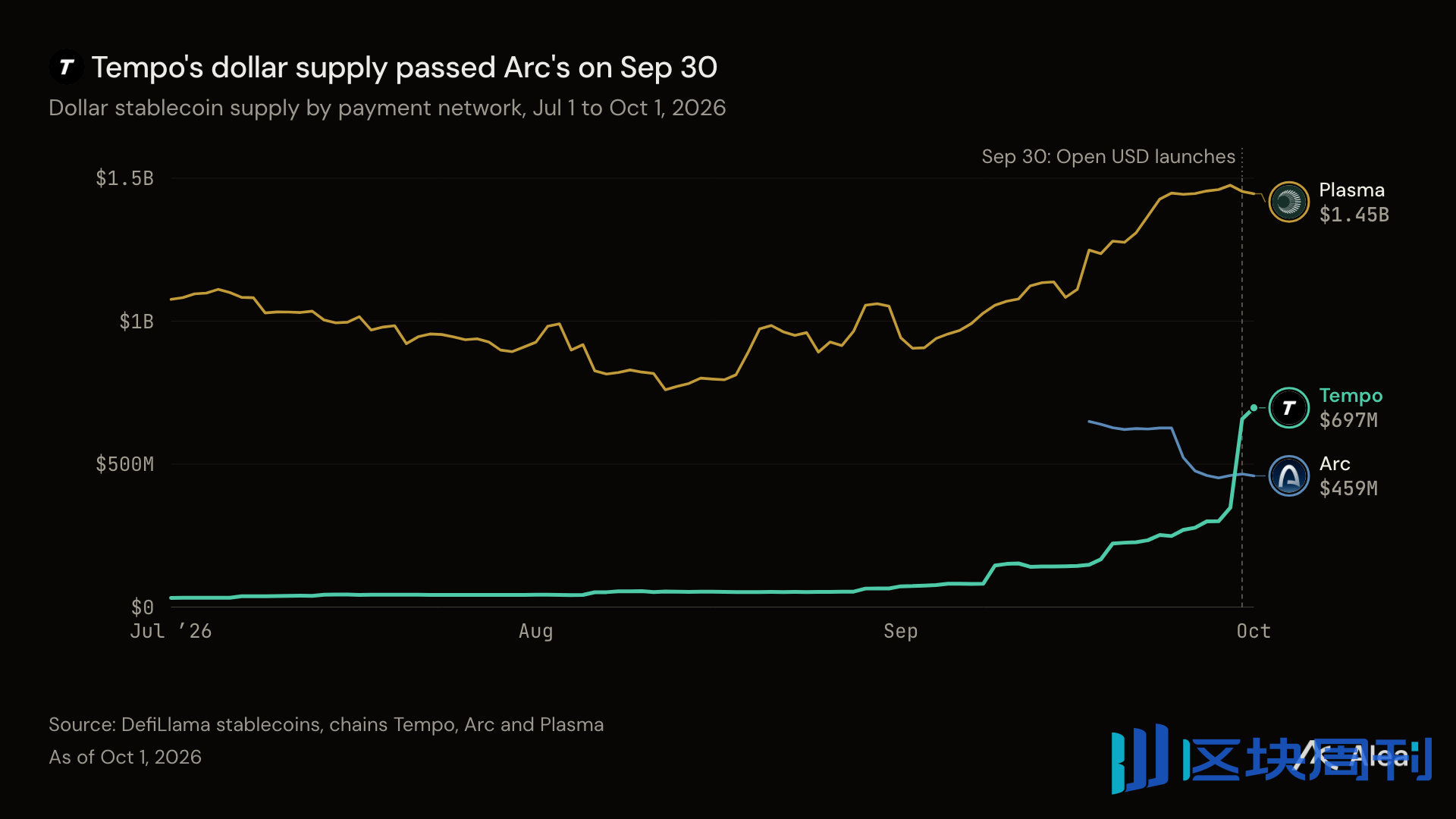
This supply puts Tempo between Arc and Plasma. It surpassed Arc on September 30, two weeks after Arc's mainnet launch; by October 1, it was about half the size of Plasma's $1.45 billion.
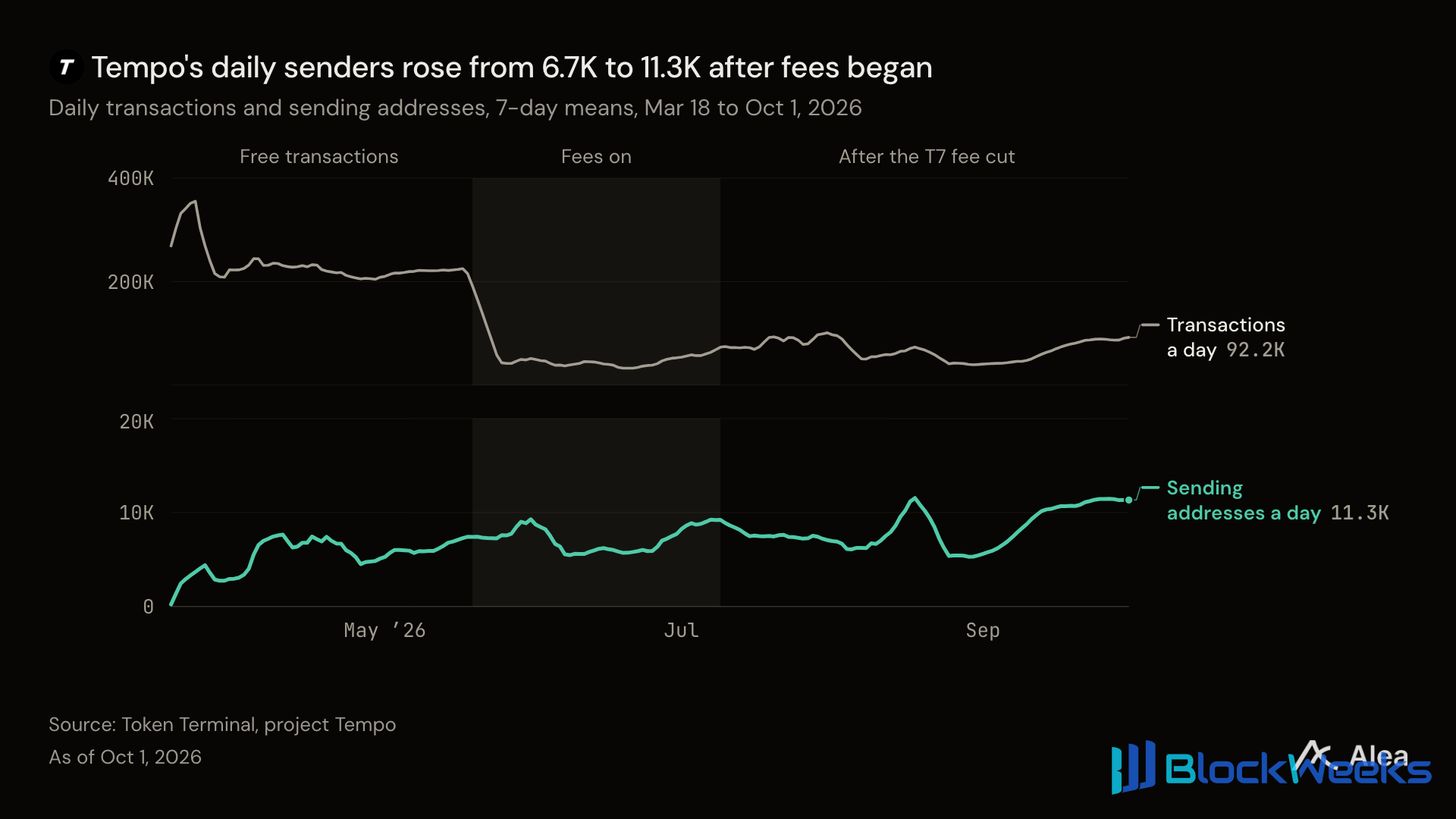
After the free traffic ended, the number of sending addresses continued to grow. While transactions were free, the network processed about 230,000 transactions per day. After fees began on May 19, daily transaction volume fell to about 42,000 over the following month, while daily sending addresses remained at around 6,700. By October 1, the seven-day average had reached 11,338 sending addresses and 92,228 transactions.
Built for finance teams
Tempo's starting point is the work finance teams do after funds arrive. Senders can pay fees in any supported dollar stablecoin, and apps can cover fees on behalf of users. Every transfer carries a memo used to link it to an invoice; issuers can set roles and transfer policies on their own tokens. Tempo reserves about 94% of each block for payment transactions, with the remaining 6% for general-purpose computation.
Competing stablecoin networks differ on what asset payers must hold to pay fees. Arc, launched by Circle on September 16, charges fees in USDC. Plasma charges fees in its own XPL token, and USD₮ transfers are free. On Tempo, every supported dollar stablecoin pays fees in its own coin, whether the issuer is a bank, a fintech company, or whether it is USDC.
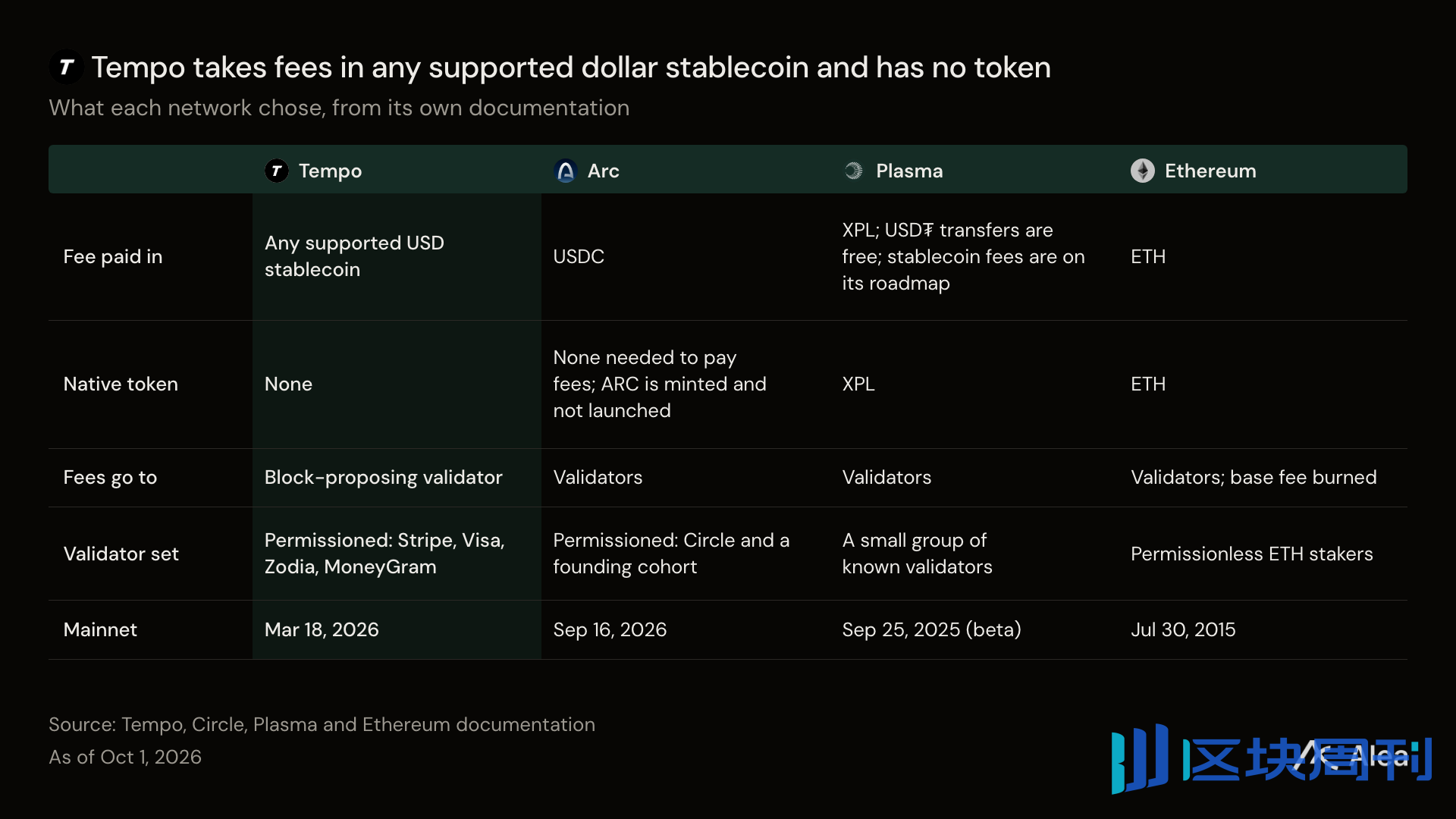
Tempo also launched with ready-made distribution channels. Stripe, Visa, and Zodia run validators alongside MoneyGram. The validator set is permissioned, and Tempo has described a path to permissionless validation but has not yet given a specific date. Businesses on Stripe processed $1.9 trillion in transactions in 2025, up 34% year over year, about 1.6% of global GDP. Stripe runs its own treasury management on Tempo in more than 100 countries, and since September 30 it has offered Open USD to its businesses, which can fund Stripe Treasury accounts from wallets on Tempo.
Who earns what when a dollar moves
The money generated by a payment flows to four participants.
Validators receive all network fees, and fees are designed to be very low. From the fee reduction on July 10 to October 1, the network collected $1,185 from 5.8 million transactions over 84 days.
Liquidity providers keep 0.3% of fees when the Fee AMM converts fees into stablecoins acceptable to validators.
Issuers and their partners earn the yield on the reserve assets behind each stablecoin. Open USD distributes reserve yield to partners, deducting only a small management fee. Tempo Earn launched on August 12, letting platforms put idle balances into tokenized money market funds, on-chain lending, and institutional credit, and set their own reward-sharing arrangements with users.
Tempo sells services around the network: a usage-based hosted API that includes fee sponsorship, and a stablecoin advisory team working with banks. Tempo has not disclosed the take rate.
Business model: senders or sponsors pay network fees in stablecoins, and every fee goes to the validator that proposes the block. The Fee AMM pays liquidity providers 0.3% of conversion fees. Issuers keep reserve yield, or distribute it to partners as Open USD does, while Earn platforms choose their own reward splits. Tempo's revenue comes from API usage and advisory work, with the take rate undisclosed. There is no token, no buyback, and no holder claim on the network's cash flows.
For businesses, no token means one less volatile asset in every payment. For Tempo, revenue comes from the services it sells, and demand for those services grows as the money on the network grows.
How much money can flow this way
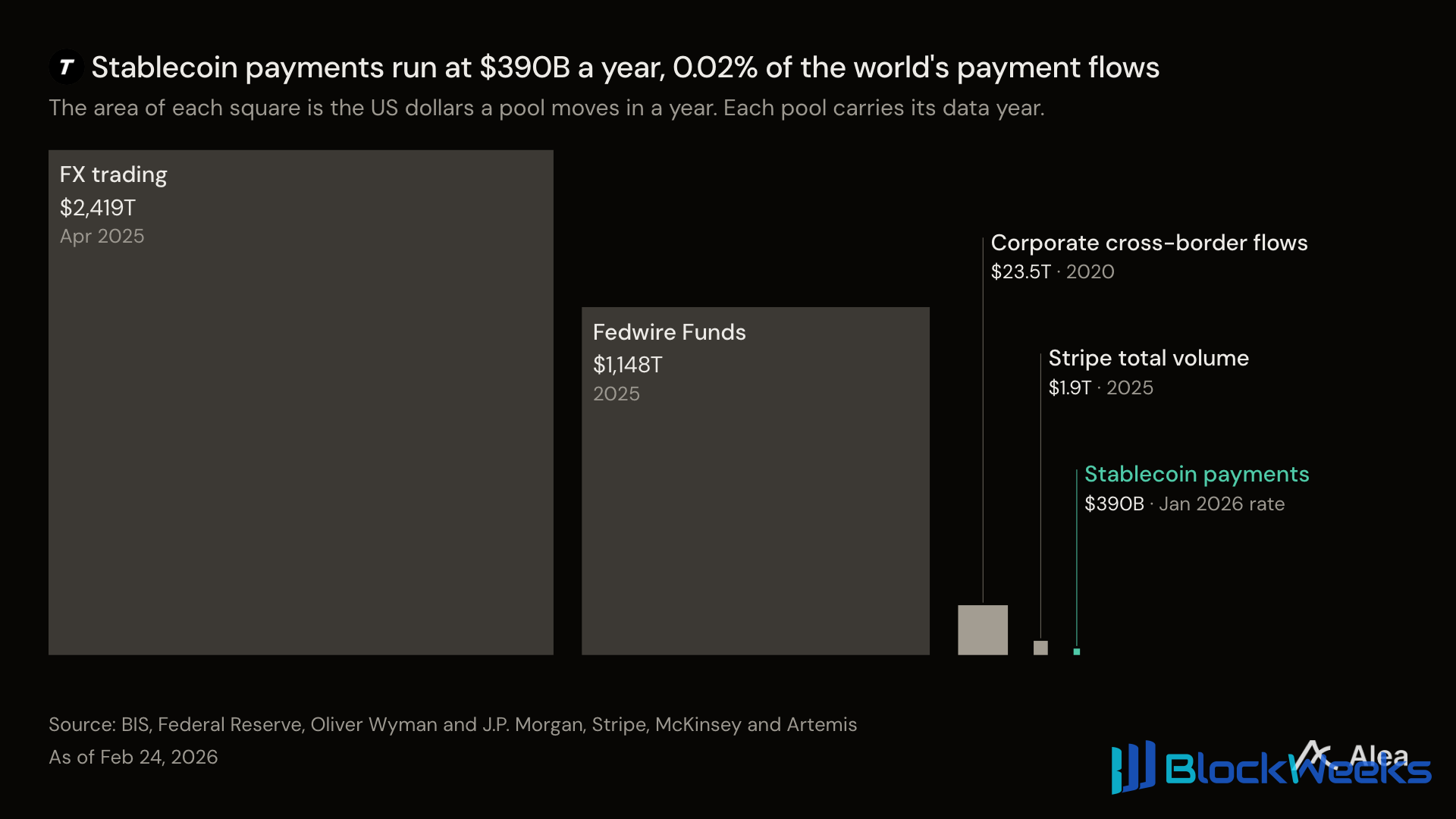
Stablecoin payments run at an annual scale of about $390 billion, 0.02% of the more than $2,000 trillion that moves globally each year. That figure covers payroll, supplier, and remittance payments. Stablecoin transfer volume reaches $35 trillion per year, most of which is trading and internal transfers.
The pools of money around that figure are much larger. Fedwire alone settled about 2,900 times that amount in 2025, while the foreign exchange market trades $9.6 trillion per day. Cross-border corporate money flows total $23.5 trillion, 60 times the stablecoin figure.
What will be launched before January
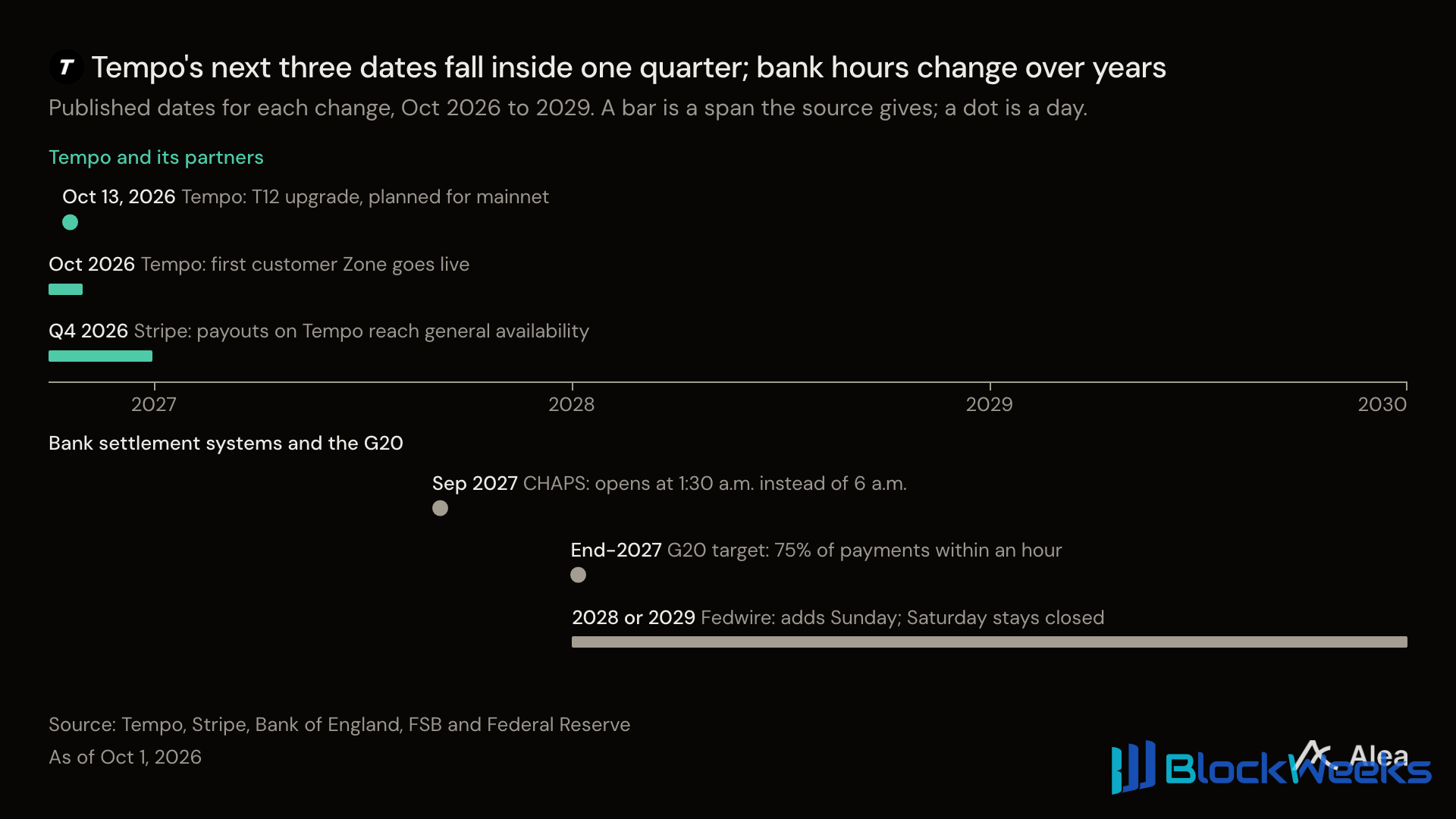
Tempo's next three time points all fall in the fourth quarter. The T12 upgrade is scheduled to go live on mainnet on October 13. It adds payment session functionality for closed-loop stablecoins, allowing issuers to transfer tokens across chains by burning and minting, without requiring separate user approval. The first Zone will go live in October, and Stripe plans to fully open payment functionality on Tempo in the fourth quarter. Tempo also listed two upcoming Open USD additions: access through Mastercard, and support in Tempo Earn.
Adjustments to bank settlement times will proceed on a longer schedule. CHAPS will begin operating at 1:30 a.m. starting in September 2027, Fedwire will add Sunday settlement in 2028 or 2029, and the Bank of England proposes that Sunday settlement be no earlier than 2029.
Containers did not make ships faster
The role of the container is to eliminate the need to unload and unpack at every port, and trade grew around this box. Tempo did the same thing for cash: funds flow between different markets on one network without needing to be reissued at every stop. Stripe's treasury management already runs on it, and it held $447 million in Open USD on Open USD's first full trading day. Fedwire will not settle on Sundays until 2028, while Tempo already settles every hour of every week.