Original | Odaily Planet Daily (@OdailyChina)
Author|Azuma (@azuma_eth)
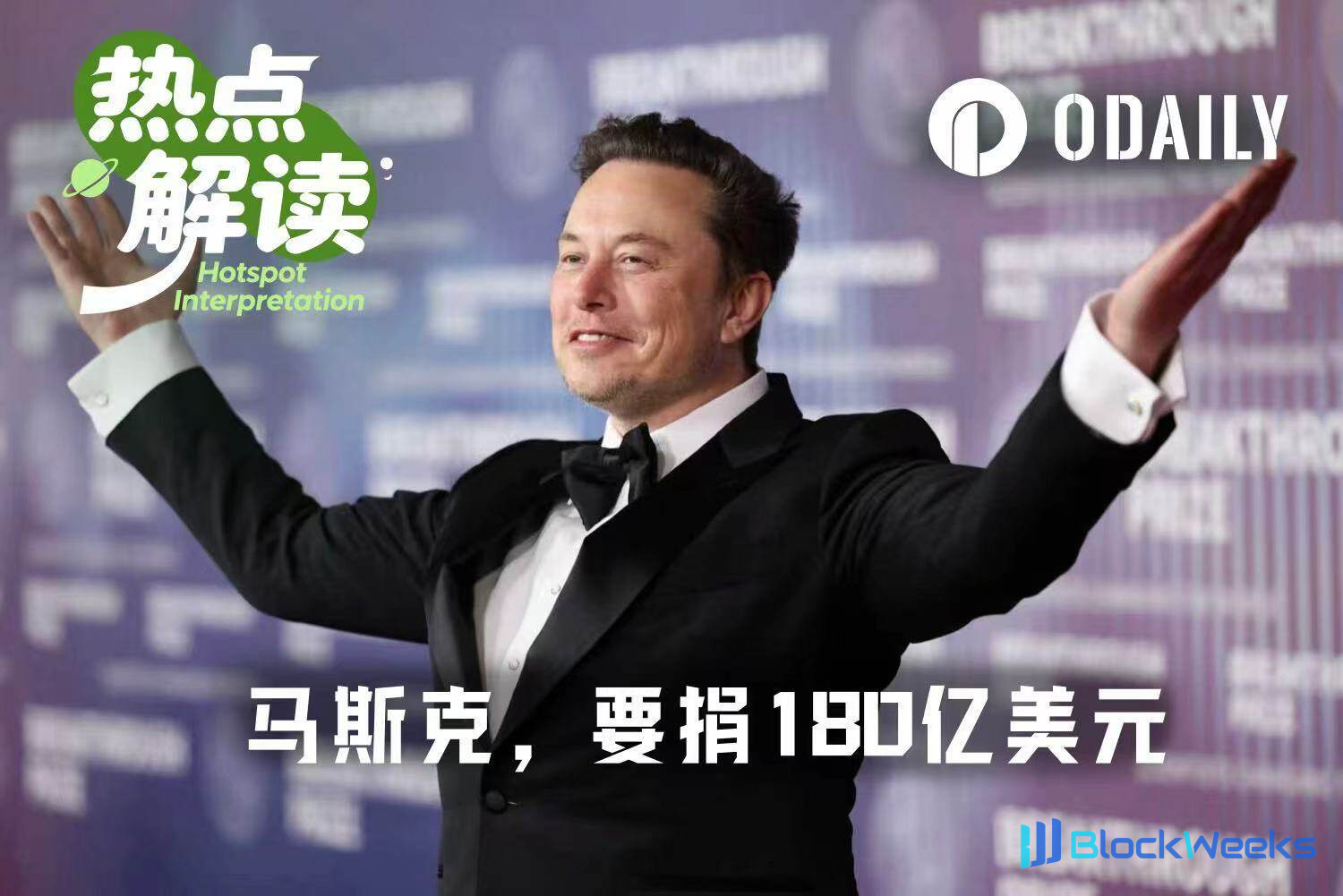
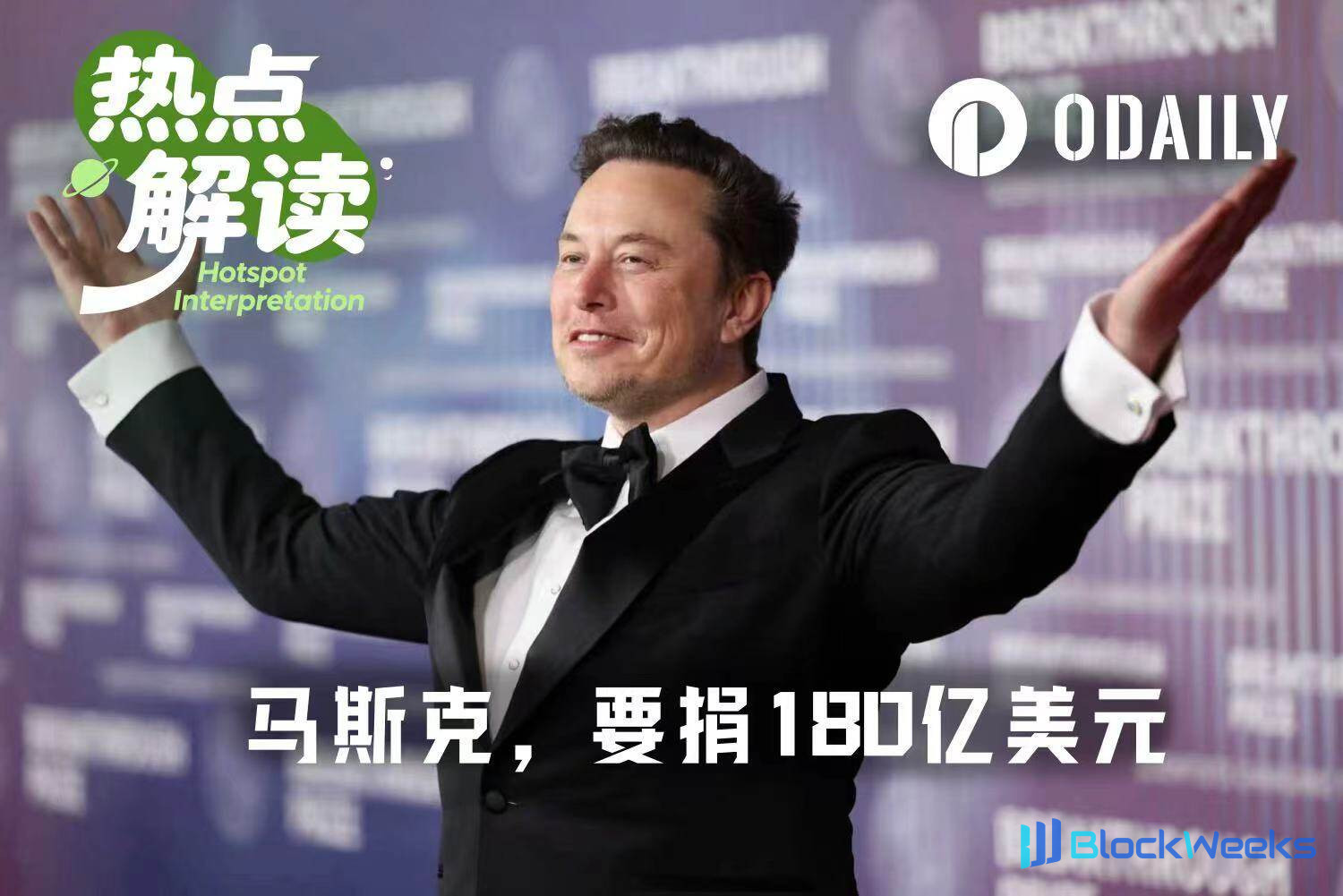
Christmas is approaching, and Musk is once again going to give gifts to American children.
But this time the gift is not candy, nor a toy car, but real SpaceX stock.
On November 25, SpaceX announced that it will give one newly issued Class A common share to every already activated Trump Account (Trump Children's Investment Account). Musk subsequently stated that he will also make a matching donation in the same amount. In other words, eligible children can theoretically receive two shares of SpaceX stock.
Based on SpaceX's closing price of $127.44 on November 25, two shares are worth about $255. If estimated based on the nearly 70 million accounts already created previously disclosed by the White House, the value of the gifted shares after full fulfillment would be about $17.8 billion, close to $18 billion.
It should be noted here that the SpaceX announcement is explicitly aimed at already activated accounts, not all created accounts — the nearly 70 million figure is only the scale of account creation previously disclosed, and the actual number of accounts currently eligible for the gifted shares has not yet been announced, but regardless of how many people are ultimately covered, this is already a rather astonishing share gift plan.
Of course, Musk would not act as a "generous spender" for no reason. Behind this seemingly generous share gift, on the surface it is supporting the children's investment account system strongly promoted by the Trump administration, but at a deeper level it is a political and commercial arrangement by the "Trump-Musk alliance" seeking to deeply bind the interests of America's next generation.
From the government giving out money to billionaires donating shares
Trump Accounts, also known as 530A accounts, are a tax-deferred investment account program authorized by then-U.S. President Trump on June 9, 2025, based on the "One Big Beautiful Bill" legislation, aimed at establishing government-funded savings accounts for children of U.S. citizens born between January 1, 2025, and January 1, 2029.
The initial funding for Trump Accounts mainly comes from government appropriations, private donations, and family deposits. The federal government will provide $1,000 in initial funding for each account; Dell founder Michael Dell and his wife announced in December last year a donation of $6.25 billion to open accounts for 25 million children in areas where the median household income is below $150,000, injecting $250 into each account; parents, friends, and other specified persons can also deposit into designated accounts, but can deposit at most $5,000 per child per year.
At the investment level, Trump Accounts will be limited to investing in low-cost investment funds or exchange-traded funds (ETFs) that track broad stock index such as the "S&P 500" index, and cannot be used to invest in specific industry indices or specific sector indices. The use of funds is also restricted. Before January 1 of the year the child turns 18 and becomes a legal adult, funds in the account may not be withdrawn for any reason (unless the child dies or the funds are transferred to another similar restricted account). After the child turns 18, the account will be treated the same as a traditional individual retirement account (IRA).
On July 4 this year, the U.S. Department of the Treasury officially announced that the long-planned Trump Accounts were officially launched. Trump at the time called on wealthy individuals including Musk to donate to Trump Accounts, and now the actions of SpaceX and Musk are a formal response to that call.
It is called giving out money, but more like dispersing chips
Unlike the Dells, who directly took out real money, Musk and SpaceX chose to donate in the form of stock, which in essence is more like effectively dispersing chips.
From the breakdown of the plan, this account is calculated quite shrewdly. The one share gifted by SpaceX is a newly issued Class A common share, which means the company's books will hardly see any direct cash outflow; the one share matched personally by Musk comes from his own holdings, and without needing to use large-scale cash reserves, it both completes a political gesture to the White House and leaves room for subsequent charitable and tax planning.
More critically, the "about $18 billion" that the outside world is hotly discussing is actually an extremely idealized upper-limit figure. As mentioned earlier, the threshold for the gifted shares is explicitly tied to "activated accounts," while the nearly 70 million figure is only the total number of accounts created previously disclosed. Considering the actual activation rate and eligibility screening, the final scale of gifted shares and the proportion of equity dilution that actually materializes will most likely be significantly lower than the number the market sees at first glance.
The secondary market also has no need to worry about selling pressure at all — the rules of Trump Accounts require that because account funds may not be withdrawn at will before the child turns 18, this batch of SPCX shares given away will be in a mandatory lock-up state for years or even more than a decade to come. In other words, Musk not only did not create any short-term sell orders for the secondary market, but instead locked in tens of millions of super "diamond hands" for SpaceX out of thin air.
The intention of killing three birds with one stone
Regarding the reason for the donation, the wording SpaceX gave in the announcement was quite "official": "The company is building the infrastructure of the future and is committed to making humanity a multi-planetary species, and ownership of the companies creating these systems should also extend to America's next generation, allowing them to benefit from long-term development." This statement fits Musk's long-standing narrative very well. From reusable rockets to Starlink to Mars colonization, SpaceX has long emphasized that what it is doing will change humanity's future.
But is it really that simple? Looking from a broader perspective, SpaceX's willingness to use real equity to do this hides at least three deeper intentions.
The first layer is occupying the brand mindshare of the next generation. Musk has always been good at managing retail consensus. Tesla's ability to enjoy a valuation premium far exceeding traditional automakers for a long time largely stems from its huge and loyal individual investor base. Now through Trump Accounts, when children open their investment accounts, they will see real SpaceX stock. This kind of "shareholder identity" established from childhood can cultivate the next generation's natural identification with Starlink, commercial spaceflight, and even Musk's entire business empire better than any commercial advertisement.
The second layer is seeking a moat at the political and regulatory level. This is exactly the "direct interest linkage" mentioned earlier. As a giant highly dependent on government orders, spectrum approvals (FCC), and launch licenses (FAA), SpaceX has suffered no small number of hidden losses in regulatory and partisan battles in the past, but if tens of millions of families' children across the United States all hold SpaceX stock, the nature of the matter seems different — in the future, any regulatory action attempting to excessively suppress or make things difficult for SpaceX may very well be characterized in the court of public opinion as "smashing the future rice bowl of American children." Deeply binding commercial interests with the well-being of the whole people is the most top-level open strategy.
The third layer is creating a demonstration effect for Trump Accounts. From the government backstopping $1,000, to Dell donating cash, to SpaceX directly entering the field to gift shares, this children's investment system strongly promoted by Trump is rapidly completing its leap from a "welfare policy" to a "capital consensus." With Musk setting an example, other American tech giants that have close ties to the White House or similarly value a domestic public opinion base will probably find it hard to continue standing aside.
A ticket to bind the next generation
Back to the title, Musk of course is not really trying to pursue some kind of "egalitarianism"; he is simply using the most American capitalist way to pull America's next generation onto his own big ship.
For the American children who receive this Christmas gift, these two shares of SpaceX stock are not $255 of pocket money they can take tomorrow to buy candy or toys, but a certificate of rights that cannot be cashed in early and is deeply bound to SpaceX's long-term fate. When these children turn 18 and truly have the right to use this asset, whether these two shares are merely a negligible bit of college living expenses or a "genesis chip" enough to change the trajectory of their lives depends on whether SpaceX can truly deliver on the grand narrative of Starship, Starlink, and space computing power over the next decade or so.
But no matter the outcome, this deal seems to be a win for Musk — with just one equity distribution with zero selling pressure and low cash consumption, he has bought out the attention and votes of an entire generation of Americans in advance.