This article was compiled and organized by BlockWeeks
This week's research brief focuses on three main threads: the return of Nvidia and Jensen Huang and Washington's further involvement in AI; Visa's "proof of humanity" solution for AI agents and the wallet battle; and a security incident at FinCEN.
Jensen Huang's Return: AI Competition Pushed onto the National Security Track
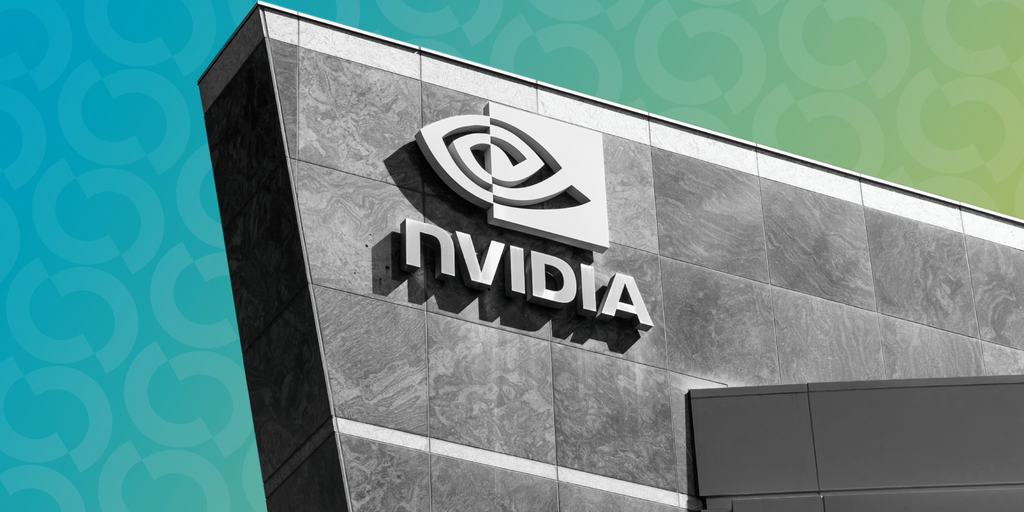
Nvidia announced on Monday that its board unanimously decided to reappoint Jensen Huang as president, CEO, and director. This came less than two weeks after his resignation. There had been reports that he could become the target of a foreign intelligence operation. Chief Financial Officer Colette Kress, who had served as interim CEO, returned to her original role, and Harvey Jones continues as board chairman.
Nvidia said the board heard from senior U.S. government officials and determined that Huang's return does not constitute a national security risk. U.S. President Trump said he personally pushed for the decision. The board's independent investigation is still ongoing. Nvidia also established a National Security and Export Controls Committee and said it would hire a chief compliance officer.
After the news of Huang's reinstatement was announced, Nvidia's stock price surged 31.5% in a single day, adding about $950 billion in market value, and the Nasdaq index rose 6.5% the same day. On the same day, the U.S. Department of Commerce blacklisted Singapore-based cloud service provider Megaspeed. The company is under investigation for allegedly transshipping U.S. chips to China. Huang plans to testify before the U.S. Senate Banking Committee on December 3 regarding U.S. chip export controls.
In his 2024 essay "Situational Awareness," Leopold Aschenbrenner predicted that if Chinese infiltration were discovered at a leading U.S. AI lab, it could push the United States to launch a government-led AI project by 2027 or 2028. This month, the head of the company supplying much of the hardware for this race resigned following reports of a possible foreign intelligence operation, Washington then intervened, and he ultimately returned to his post.
Nvidia is not a frontier model lab, and the allegations surrounding Huang are still under investigation. But this incident supports Aschenbrenner's broader judgment: the strategic importance of AI will draw national security agencies more deeply into its development. In Nvidia's case, government intervention was aimed at maintaining continuity at the private company underpinning a large share of AI infrastructure buildout. A corporate leadership decision thus became an event of national economic importance, once again highlighting the entire AI ecosystem's dependence on Nvidia.
However, priorities within Washington are not fully aligned. The government supported Huang's reinstatement, but the Commerce Department simultaneously tightened restrictions on access to Nvidia chips. The new rules target remote access to advanced U.S. computing power through overseas data centers, while the Megaspeed blacklist points to the alleged route for transshipping chips to China. Lawmakers from both parties are demanding explanations regarding export compliance and the government's role in the board reversal. Huang is back at the helm, but Nvidia's ability to serve Chinese demand through foreign intermediaries is narrowing.
The Dilemma of Open-Weight Models and Export Controls
These restrictions have a direct impact on open-weight AI, a field Huang has long supported. Nvidia has a clear commercial incentive to support developer-downloadable, modifiable models: the more accessible advanced models are, the more companies will build AI applications, and the larger its hardware and software market becomes. This strategy includes a proposed $12.93 billion acquisition of Hugging Face, an important platform for distributing open models. Huang's return keeps one of the industry's most outspoken advocates of open weights at the helm, even though Nvidia had reaffirmed its commitment to the strategy during his absence.
The complication is that some of the most competitive open-weight models come from China, and their contributions are not limited to Chinese developers. Chinese labs have released open-source software such as DeepSeek's DeepGEMM and DeepEP, which have been incorporated into Western AI infrastructure, including frameworks such as vLLM. Restricting access to U.S. computing power may slow China's future model development, but it will also reduce contributions to the broader open-source ecosystem. Stricter controls could also accelerate China's shift to domestic chips, weakening Nvidia's long-term influence over China's AI development.
A new report from a U.S. House committee calls for removing Chinese models from federal systems while encouraging competitive American alternatives. The report also acknowledges that the United States lacks open-weight alternatives that match Chinese products in price and performance. This creates a potential unintended consequence: if restrictions take effect before Chinese open-weight model development slows and U.S. alternatives have yet to close the gap, developers may become more dependent on proprietary models from frontier labs such as OpenAI and Anthropic. Rather than necessarily expanding access to advanced AI, the restrictions may further concentrate influence in the hands of a few companies.
Visa's "Proof of Humanity" for AI Agents and the Wallet Battle
Visa launched a "proof of humanity" solution for AI agents, the core of which is confirming that a real human exists behind the agent. In agentic commerce, the agents that will actually enter transactions will be those that can bring economic benefit to retailers—either through revenue-sharing agreements or by displaying the retailer's own ad inventory. This is also why retailers are placing ads in their own AI tools. An agent that proves its owner is a real person but skips ads still does not solve the problem on the retailer side.
The industry is converging on the word "wallet," but the two products using that term come from crypto and legacy definitions respectively. OpenAI's ChatGPT Wallet follows the Apple Pay model, storing card credentials, with funds remaining in bank accounts and moving through card networks. Visa CLI is a wallet in the crypto-native sense, where the account itself holds digital funds, namely the OUSD stablecoin.
This difference matters because people do not just spend; they also save and invest. Today's agents are mainly focused on spending, but as they take on more of their owners' financial lives, they will eventually need to handle the rest. In the traditional financial system, these tasks are scattered across different institutions and settlement rules set by activity and use case, and in some cases do not even offer programmatic access to the holder's assets or the operations the platform supports (such as trading). Human operators can function in this environment, while agents are autonomous entities that benefit from a single source of truth and require programmatic access. Digital assets and blockchain natively make this possible: stablecoins, tokenized Treasuries, money market funds, and equities can all be held in the same wallet, transferred programmatically over the same rails, and settled in the same way.
For now, Visa's wallet is still narrow, holding no tokens other than OUSD. But a wallet that stores card credentials can only pay, whereas a wallet that holds digital assets can in principle hold anything that has been tokenized. That is precisely where its long-term potential lies.
FinCEN Security Incident
In addition, Marc Hochstein examined a security incident at FinCEN. FinCEN is the Financial Crimes Enforcement Network under the U.S. Department of the Treasury, responsible for anti-money laundering and financial intelligence work. The incident was listed as one of this week's research priorities and involves information security at a financial regulator. Against the backdrop of increasingly frequent interaction between the crypto industry and regulatory enforcement data, the impact of such incidents deserves continued attention.