Summary:
Anthropic has launched the Claude Artifact desktop app installation feature, giving AI-generated software its own icon, window, and system interaction capabilities. From a generation tool to an application runtime platform, Claude is attempting to change the way software is produced and distributed. It is still some distance from a true app marketplace, but it has already launched a worrisome probe against the traditional app ecosystem represented by Apple's App Store.
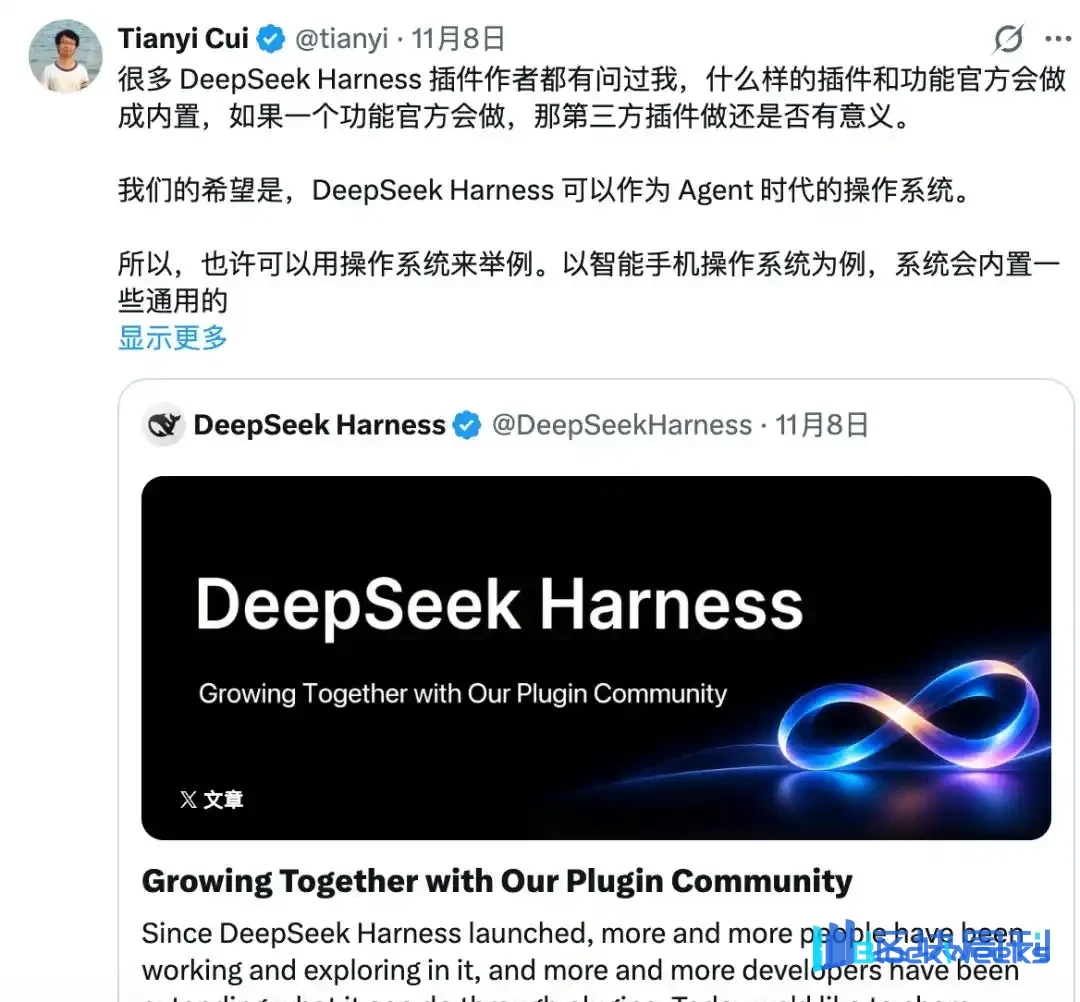
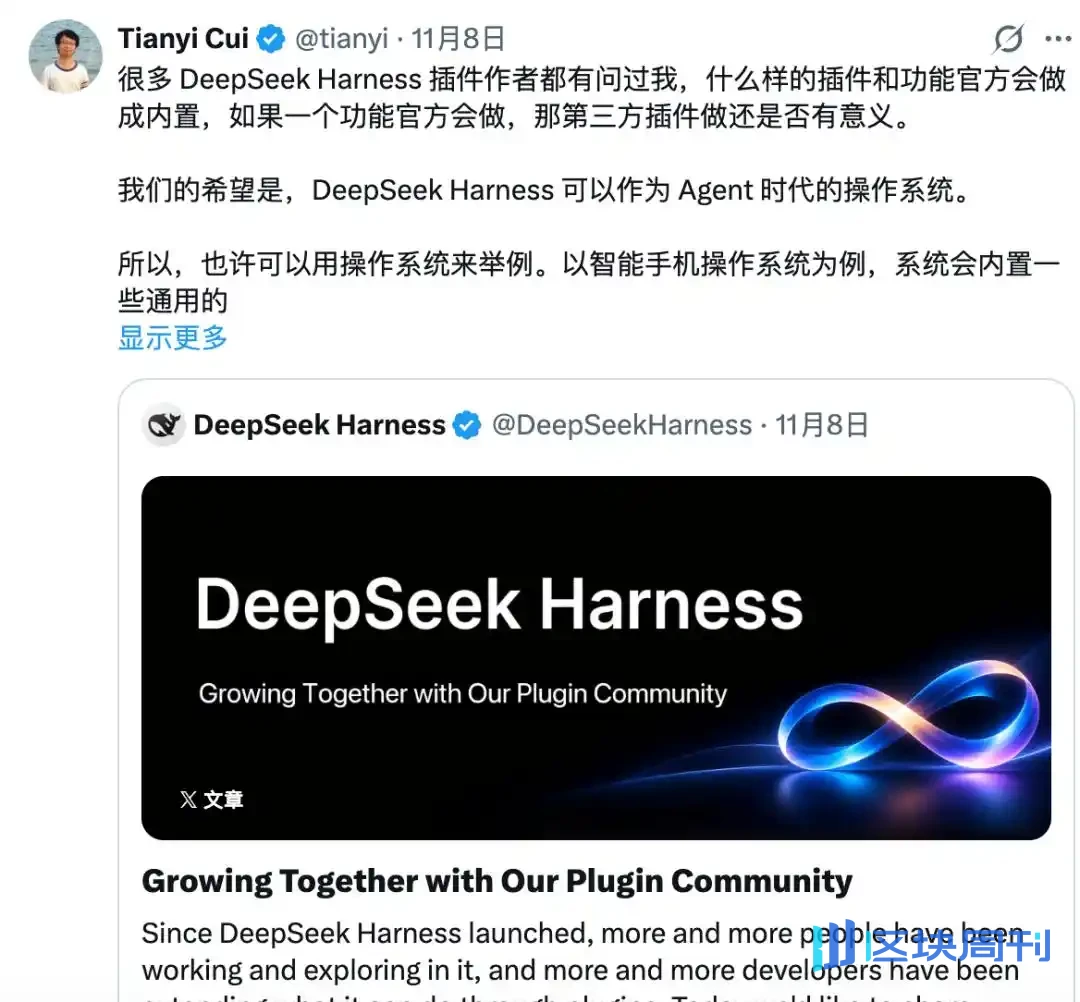
"The next super app doesn't have to be a super app for everyone; it can also be one that belongs only to you." In mid-November,
DeepSeek Harness
lead Cui Tianyi's judgment was repeatedly relayed on the social platform X. After joining
DeepSeek
this spring, he has been promoting an agent foundation of "everything is a plugin," and has stated that
DeepSeek Harness
wants to be the operating system of the Agent era.
On November 24, Anthropic echoed this judgment with a product update.
That day, Anthropic pushed a feature called Install as app to Mac and Windows users in beta form. According to the official demo, users only need to enter their requirements in the dialog box, and Claude will generate an interactive Artifact in the chat window; by clicking Install as app, this tool immediately has its own icon and window and opens like native software. No packaging, signing, or separate API key configuration is required.
When users can have an Agent generate applications on demand and then install them with one click, the "shelf" logic that the software ecosystem has followed for years begins to loosen. Does this mean that the software ecosystem Apple defends will also be truly challenged?
AI says it wants apps to disappear, yet it starts giving apps icons
Over the past two years, the argument that "AI will kill apps" has always hung over the software industry. Amid collective panic, consensus quickly converged: either become Skill-based and MCP-based, turning products into "hammers" in the hands of Agents; or be eliminated.
Anthropic, however, has made a counterintuitive move: not only to make applications, but to give each application an icon, a window, and a fixed entry point, putting back one by one the things the software industry has been busy dismantling.
This can indeed be called a reverse exploration centered on "user experience."
On the one hand, it reexamines how humans interact with Agents, freeing users from long, crowded chat windows; on the other hand, it better fits the logic of real workflows, putting office work back on a "task-centered" track.
For frequently used tools, users need intuitive, stable entry points, not having to search through historical conversations every time.
But Anthropic has no intention of following the old path of traditional software vendors. It collectively calls these applications generated by Claude Artifacts, not Applications.
What is an Artifact? The official definition is: "anything you can show to others."
Artifacts were initially just "shareable work outputs" such as charts and web pages, but now users have retained them and use them as everyday tools.
On social media, using AI to build personal workbenches and design life SOPs has become something of a prominent discipline.
Users do indeed gain a kind of psychological satisfaction in taking control of work and life through "creating tools with their own hands." This also explains the word-of-mouth effect of
DeepSeek Harness
custom plugins.

The actual increment of this Claude update is to give Artifacts an independent desktop form beyond "interactive outputs in the chat window": after user authorization, it can push notifications, reside permanently in the menu bar or system tray, and continue running in the background while the user uses other software.
Generation tools are nothing new; what is more intriguing is that Claude's ecological niche is undergoing a subtle change.
Beyond generation, Claude tries to take over the app ecosystem
Intuitively, Install as app reduces the time cost for users to search, install, register for, and learn software for a certain function. Claude fully customizes applications according to users' prompts, ready to use upon installation and updated as changes are made. Everyone can vibe code their ideal software.
But as friction disappears, the account system replaces independent software licensing, and users are deeply bound into the Claude ecosystem. An independent window does not equal independent operation. The official statement makes it clear that to open these applications, one must be online and logged into Claude Desktop.
In other words, these "applications" are more like interfaces that Claude projects onto the desktop, rather than programs detached from the platform.
These Artifacts can call Claude models, and each request consumes the usage quota of the user's plan. In the past, buying software was a one-time purchase; now, using software burns tokens per use.
Updates and maintenance are no exception; the "growth" of tools also depends on Claude's continuous service, and the cost of user migration is thereby raised.
Anthropic wants to become the "center" of the entire application ecosystem: internally, it mass-produces applications through AIGS, and both use and maintenance are inseparable from a Claude account; externally, more and more third-party applications are growing around it, and the development logic has shifted from "user-centered" to "Claude-centered."
When everyday tasks and life moments all flow through Claude, the large model bypasses the operating system and becomes the de facto foundation supporting users' work and life.
Claude wants to become OS-like, is Apple in danger?
Although Anthropic has not explicitly said it will start from scratch to build its own operating system, it has used a series of moves—generating apps, unifying accounts, staying resident on the desktop, and integrating the ecosystem—to hollow out Apple and its peers.

This is a positioning battle fought without declaration. And the app ecosystem is a position Apple absolutely cannot afford to lose.


Apple disclosed that in 2025 the App Store had more than 850 million weekly active users; over the full year, the app ecosystem facilitated more than $1.4 trillion in developer billings and sales, of which more than 90% required no commission paid to Apple, with revenue going entirely to developers.
Revenue is only book value; the strategic significance of the developer community to Apple is far from being reflected in the financial statements.
In the words of former Apple CEO Tim Cook, developers are the lifeblood of Apple's app ecosystem.
And Claude's product moves this time are clearly becoming a new variable disturbing developers' stickiness to Apple, tearing a gap in the closed-loop ecosystem. Some developers have already admitted that they regret having invested so much time in app development for the Apple ecosystem.

In the past, the market imagined the Agent as a super entry point. Integrated hardware-software giants represented by Apple and Microsoft also optimistically believed that AI could help developers better drive innovation in their own ecosystems.

But they overlooked that innovators will inherently break the existing commercial balance. Just as AI accelerates its own iteration, the commercialization of foundation model companies is also conquering territory all the way, and ecosystemization is an unavoidable gateway in this campaign.

An intimate relationship has become a dangerous relationship. How Apple responds will directly determine the direction of this ecosystem battle.
This article is from the WeChat public account "Phoenix Tech", author: Phoenix Tech